
Sagging and bouncy floor repair in Nashville, TN
A floor that gives underfoot is reporting on the framing beneath it. In a house over a crawl space, that is usually a moisture story that has been running for years.
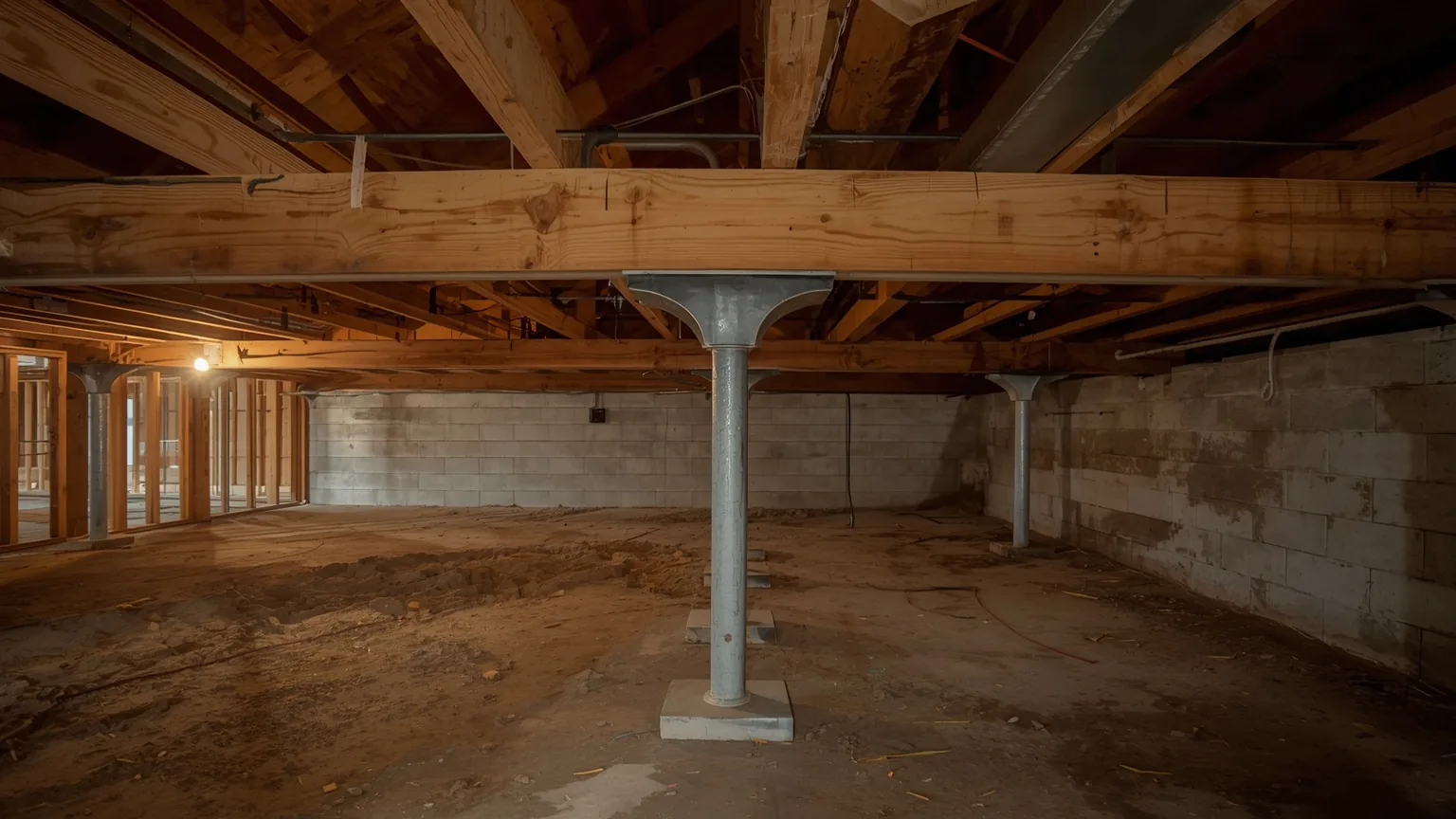
Who handles sagging & bouncy floor repair in Nashville, TN?
Nashville Crawl Space Solutions arranges structural crawl space repair across Nashville and Middle Tennessee. Floors that sag, bounce or slope generally indicate joists, girders or support posts that have lost capacity — most often through sustained moisture exposure. The repair holds only if the moisture source is resolved as part of the same job. Call (615) 805-5343 to arrange an evaluation.
What the symptom is telling you
Floor framing is sized to be stiff, not merely strong enough not to break. When a floor starts to feel springy underfoot, something in the load path has lost stiffness — a joist that has softened, a girder that has deteriorated where it bears, or a support post that has settled or rotted at its base.
The distinction between symptoms is useful. Bounce across a broad area suggests joists or girder support. A localised dip or slope suggests a specific post or pier. Doors that stick and gaps opening at trim suggest movement that has been progressing for some time. None of these is diagnosable from the top of the floor, which is why the inspection happens underneath.
Why moisture is usually the cause under a crawl space
Wood loses strength and stiffness as its moisture content rises, and sustained wetting supports the fungal decay that destroys it outright. In a vented crawl space, framing spends summers in contact with humid air, condensation forms on surfaces below the dew point, and the wood never fully dries between cycles.
Support posts add a second path. A post bearing on soil or on an inadequate footing can settle as the ground beneath it moves with moisture — and Middle Tennessee's soils over limestone are not uniform, so one post can move while its neighbours do not. That produces the localised dip rather than the general bounce.
Sistering, replacement, and the order of work
Where a joist has lost capacity but the majority of its section is sound, a new member can be fastened alongside it — sistering — to carry the load. Where decay has gone too far, or where the damage is at the bearing point, replacement is the honest answer. Which applies is a judgement made on the member, not from a price list.
The sequence is what determines whether the repair lasts. Structural work performed while the moisture source is still active puts new wood into the conditions that destroyed the old wood. Any scope worth accepting resolves water and humidity as part of the same project, not as an upsell afterwards.
What to expect from an inspection
Someone gets under the house and looks at the framing along the whole load path — joists, girders, posts, footings and the sill where it meets the foundation. Moisture readings are taken in the wood. The point is to establish both what has failed and why, because the second question determines the scope.
You should come away with a written description of which members are affected, what is proposed for each, and what is being done about the moisture. A quote that specifies a number of jacks or posts without saying what is causing the problem is quoting a symptom.
Why this keeps happening in Middle Tennessee
The physics that ruins vented crawl spaces is simple. Warm outdoor air holds far more moisture than cool air. When that air enters a crawl space and touches surfaces sitting below its dew point — ductwork, pipes, the underside of the subfloor — the moisture condenses out onto them. The vents that were supposed to dry the space are what deliver the water.
Nashville sits in a humid subtropical climate, which means long stretches of warm, moisture-heavy air from late spring through early fall, which is why crawl spaces here are often at their worst in midsummer rather than after heavy rain. Middle Tennessee sits on limestone. Limestone weathers into karst — fractures, seams and voids that move water underground in ways that are difficult to predict from the surface.
Wood begins supporting fungal growth at roughly 20 percent moisture content. Structural framing is not damaged by a single humid week; it is damaged by months of sitting above that threshold. Air moves upward through a house. A meaningful share of the air in your living space started in the crawl space, which is why crawl space humidity and odor show up upstairs.
Sagging & Bouncy Floor Repair questions
Are bouncy floors a structural emergency?
Usually not an emergency, but they are a signal not to leave indefinitely. Bounce indicates lost stiffness in the framing, and the moisture conditions that typically cause it continue working while the floor is in that state. Early inspection generally means a smaller scope than waiting for a visible slope.
Can sagging floors be fixed without encapsulating the crawl space?
The framing can be repaired on its own, but if moisture caused the damage, the new material sits in the same conditions as the old. Where a moisture source is identified, resolving it is what makes the structural repair durable rather than a repeat of the previous work.
What is joist sistering?
Sistering fastens a new joist alongside a damaged one so the pair carries the load together. It suits members that have lost capacity but remain largely sound. Where decay is extensive or concentrated at the bearing point, replacement is the appropriate repair instead.
Why is only one part of my floor sinking?
A localised dip usually points to a specific support post or pier rather than the joists generally. Posts can settle when the soil or footing beneath them moves, and because soils are not uniform, one post can move while adjacent ones stay put — producing a dip rather than a general sag.
Will I be able to see the problem from inside the house?
You see the symptom, not the cause. Sloping floors, doors that no longer latch and gaps at baseboards all report that something has moved, but which member has failed and why can only be established under the house with the framing visible and moisture readings taken.
Related repair & structure services
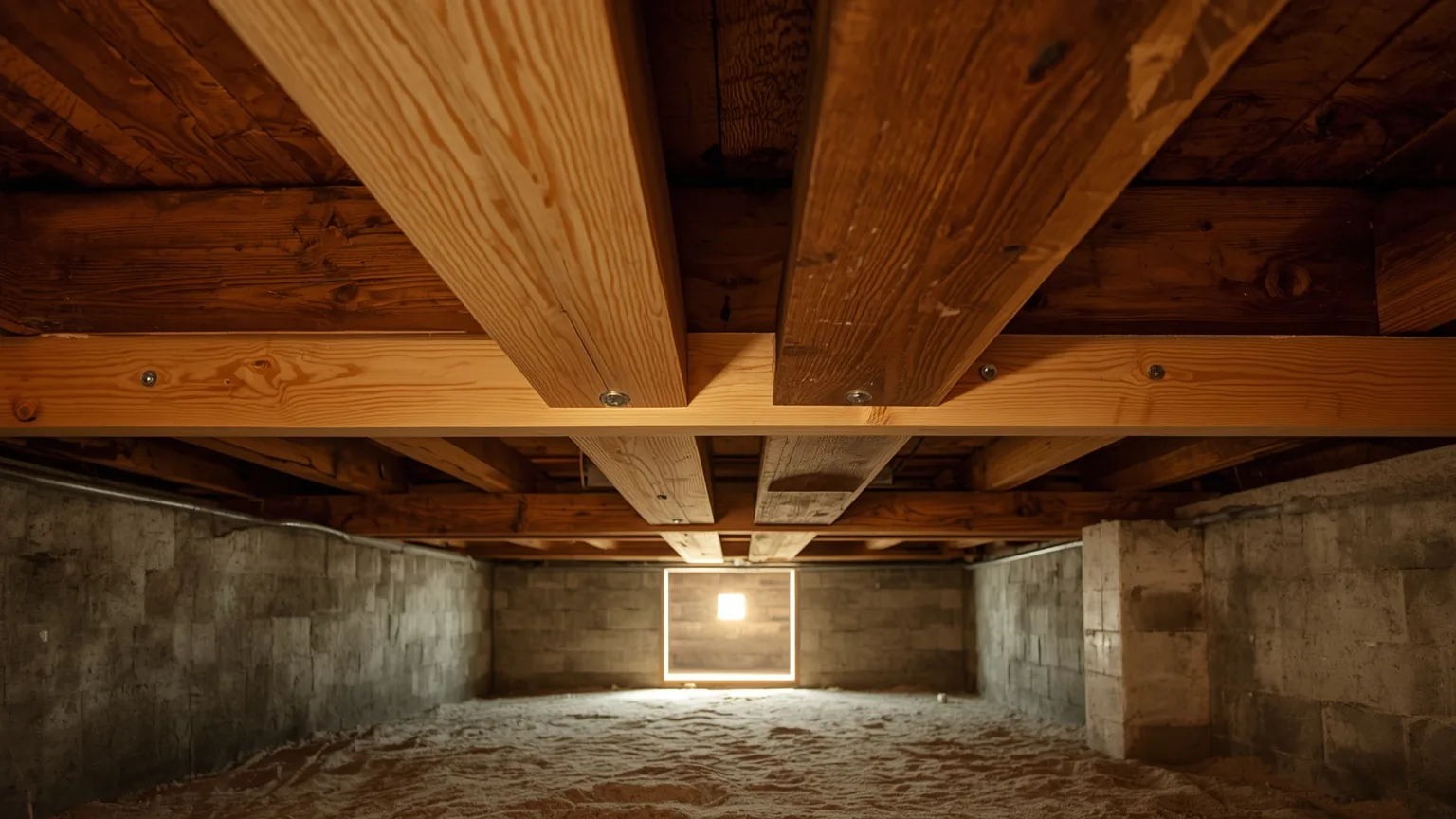
Crawl Space Repair
Most crawl space repair is moisture damage that has been running long enough to reach the framing. Fixing the wood without fixing the water means doing it again, so a sound repair addresses both — in that order.
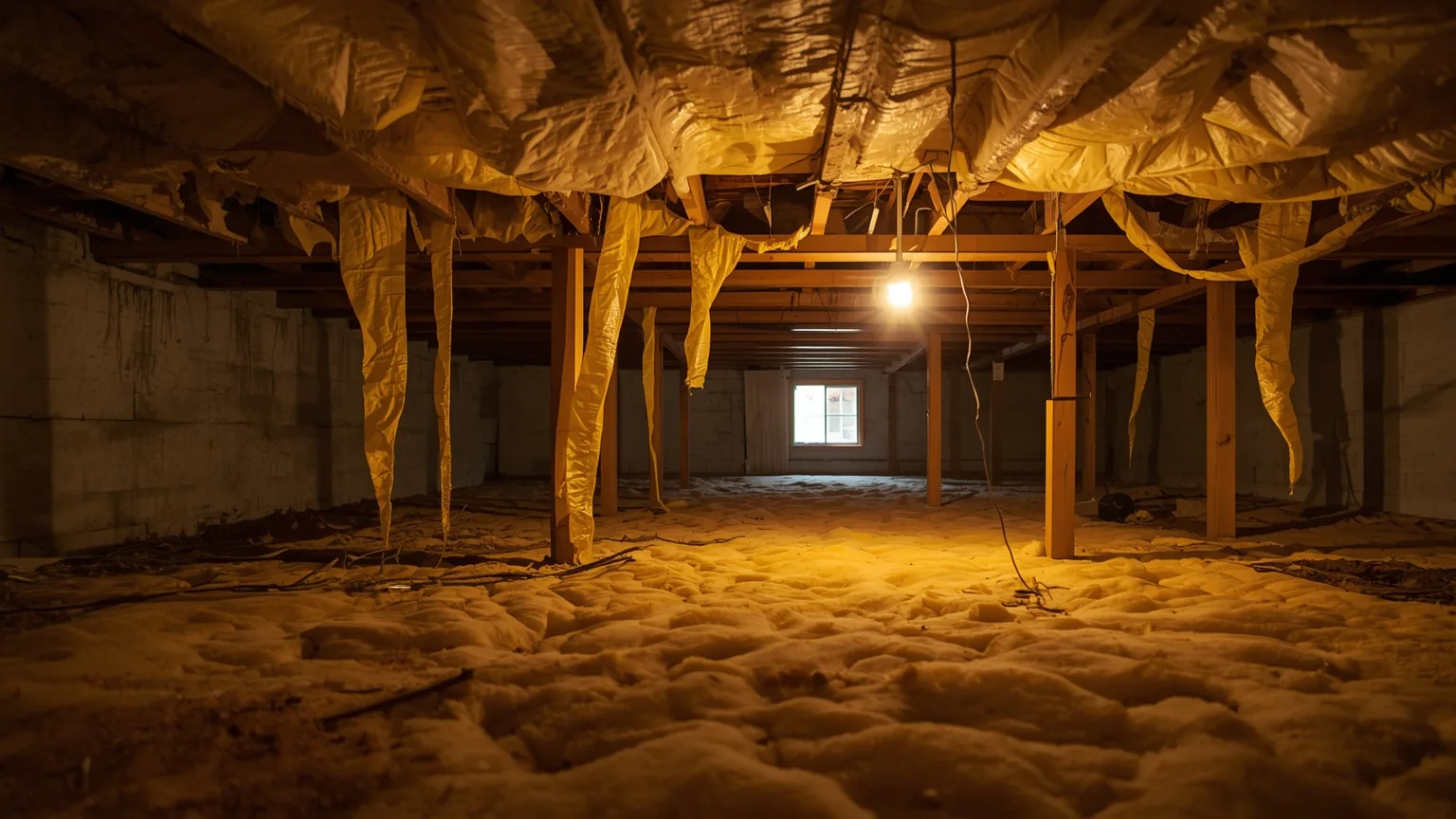
Crawl Space Insulation
Fallen, matted insulation is one of the most common things homeowners notice in a crawl space. It is worth understanding that it is usually a symptom — the insulation failed because of moisture, and replacing it without addressing that produces the same result again.
Find out what is actually causing it.
An on-site evaluation with moisture readings and a written scope — before any work is quoted.