
Crawl space repair in Nashville, TN
Most crawl space repair is moisture damage that has been running long enough to reach the framing. Fixing the wood without fixing the water means doing it again, so a sound repair addresses both — in that order.
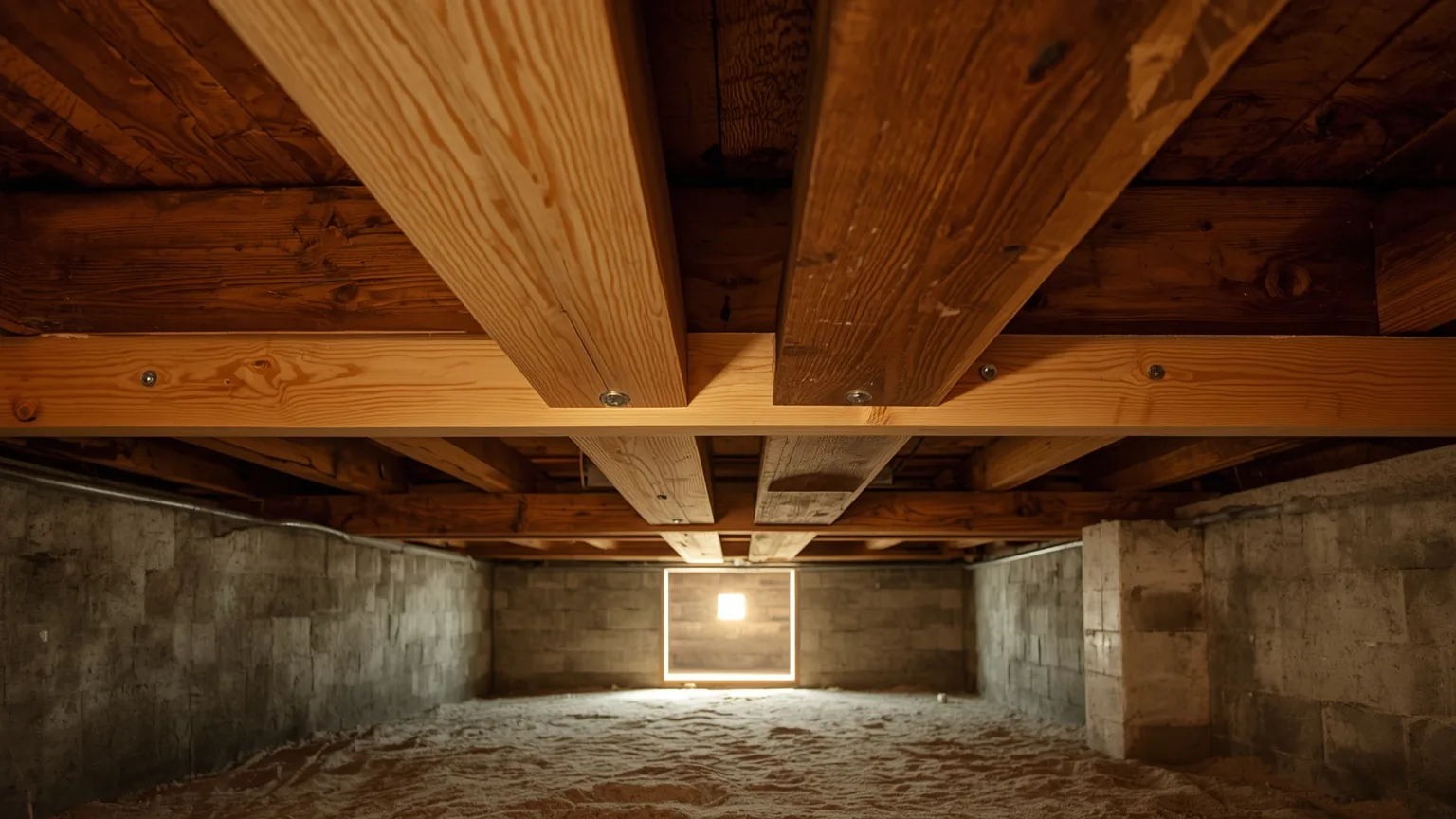
Who handles crawl space repair in Nashville, TN?
Nashville Crawl Space Solutions arranges crawl space repair across Nashville and Middle Tennessee — deteriorated joists and beams, failing supports and piers, sagging floors, moisture damage and insulation replacement. Call (615) 805-5343 to arrange an evaluation.
What usually needs repairing
Crawl space repair covers a fairly consistent set of problems. Floor joists and beams that have taken on moisture long enough to soften or rot. Support posts and piers that have settled, shifted, or were undersized to begin with. Subfloor that has delaminated from below. Insulation that has absorbed water, lost its R-value, and fallen away. Ductwork that has come apart or is sweating.
Above the crawl space, the symptoms a homeowner actually notices are floors that feel bouncy or slope noticeably, interior doors that stop latching squarely, and musty odor on the ground floor that returns every summer.
Structural damage from moisture
Wood holds up well to occasional wetting and poorly to sustained damp. Around 20 percent moisture content, fungal decay becomes possible, and framing that stays above that level through repeated humid seasons loses strength gradually rather than suddenly.
This is why crawl space structural damage tends to be discovered late. There is no dramatic event — just a floor that has slowly become springy, or a door that has stopped closing properly over a couple of years. By the time it is obvious upstairs, the affected members have usually been damp for a long time.
Repair approaches vary with the extent. Sistering adds new material alongside a compromised joist. Badly deteriorated members are replaced outright. Failing supports are replaced or supplemented, sometimes with adjustable posts that allow a sagging area to be brought back gradually. Which is appropriate depends on how far the damage has gone, and that requires someone under the house with a moisture meter.
Why the water has to be fixed first
Replacing a rotted joist in a crawl space that is still wet buys you time, not a solution. The new wood sits in the same conditions that destroyed the old wood.
A sound sequence establishes where the moisture comes from and stops it — surface water and grading, groundwater intrusion, plumbing leaks, or humid air condensing on cool surfaces — then repairs the damage, then controls the remaining humidity so the conditions do not return.
It is worth being direct about this when you get quotes. A contractor who proposes structural repair without addressing the moisture source is selling you the same job twice.
What an inspection should tell you
You should learn which specific members are damaged and how badly, based on moisture readings and physical inspection rather than a general impression. You should learn where water is entering and by what mechanism. And you should get a written scope showing the order of work.
If a report describes damage but cannot say where the water is coming from, the diagnosis is incomplete. That question is the one that determines whether the repair lasts.
Why this keeps happening in Middle Tennessee
The physics that ruins vented crawl spaces is simple. Warm outdoor air holds far more moisture than cool air. When that air enters a crawl space and touches surfaces sitting below its dew point — ductwork, pipes, the underside of the subfloor — the moisture condenses out onto them. The vents that were supposed to dry the space are what deliver the water.
Nashville sits in a humid subtropical climate, which means long stretches of warm, moisture-heavy air from late spring through early fall, which is why crawl spaces here are often at their worst in midsummer rather than after heavy rain. Middle Tennessee sits on limestone. Limestone weathers into karst — fractures, seams and voids that move water underground in ways that are difficult to predict from the surface.
Wood begins supporting fungal growth at roughly 20 percent moisture content. Structural framing is not damaged by a single humid week; it is damaged by months of sitting above that threshold. Air moves upward through a house. A meaningful share of the air in your living space started in the crawl space, which is why crawl space humidity and odor show up upstairs.
Crawl Space Repair questions
How do I know if my floor joists are damaged?
The reliable indicators come from under the house — moisture readings above roughly 20 percent, visible fungal growth, wood that gives when probed, or members that have visibly deflected. From upstairs, bouncy or sloping floors and doors that no longer latch square are common signs worth investigating.
Can damaged floor joists be repaired or must they be replaced?
Both are used depending on severity. Sistering — fastening sound new material alongside the damaged member — works when the original still has meaningful strength. Members that have rotted through are replaced. That call should follow an inspection, not a phone conversation.
Why does my floor feel bouncy?
Bounce usually means the framing has lost stiffness — from moisture-damaged joists, a failing support or pier, or spans that were marginal to begin with. It is worth investigating rather than living with, because the underlying cause typically continues to progress.
Do I need to fix moisture before structural repair?
Yes, in nearly every case. New framing installed into a wet crawl space is exposed to the same conditions that damaged the original. The moisture source should be identified and controlled as part of the same project.
Should wet insulation be replaced?
Wet fiberglass insulation has lost most of its insulating value and holds moisture against the subfloor, so it is generally removed. Whether it is replaced, and with what, depends on whether the crawl space is being encapsulated — a sealed crawl space is insulated differently from a vented one.
Related repair & structure services
Crawl Space Insulation
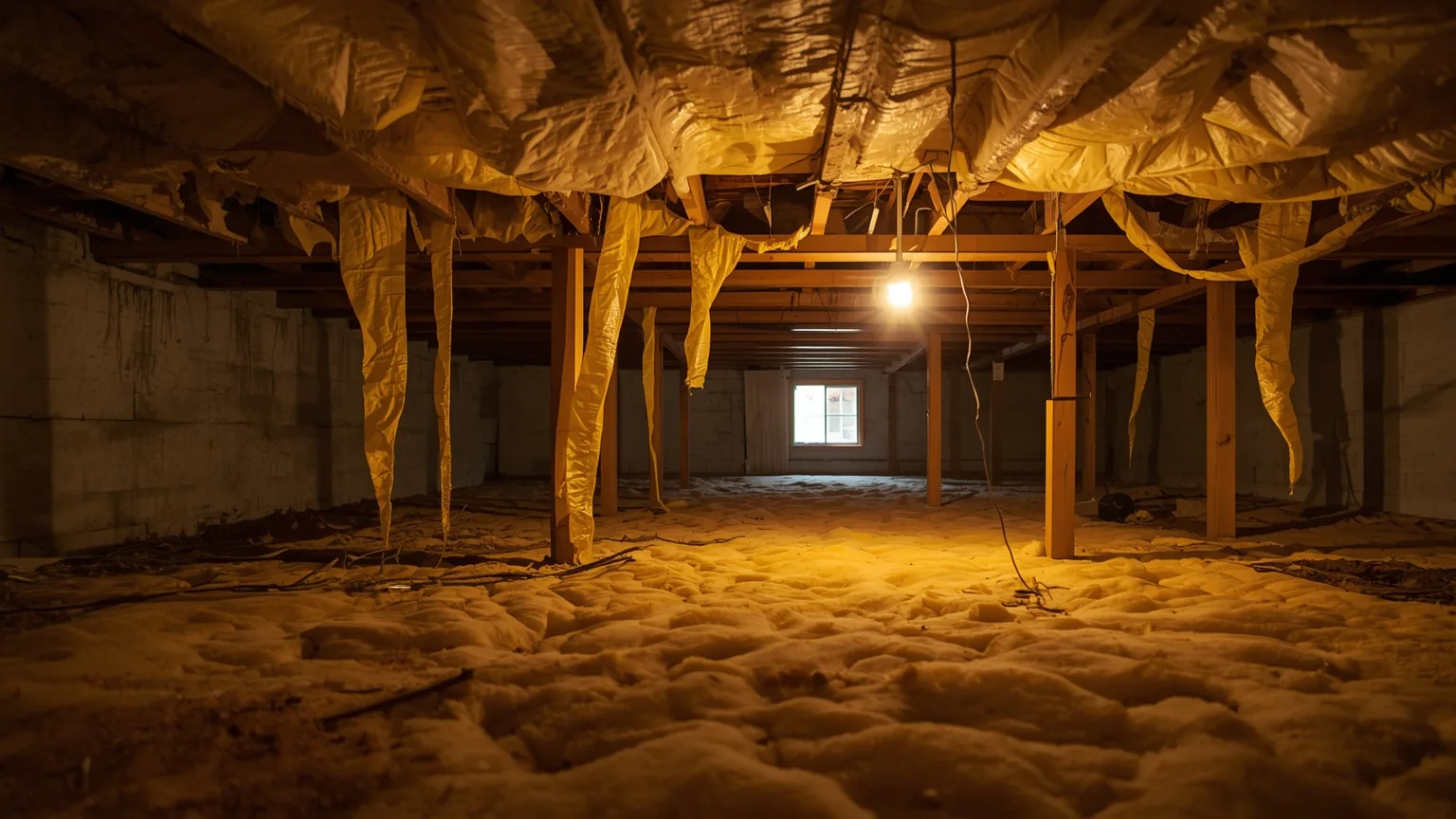
Fallen, matted insulation is one of the most common things homeowners notice in a crawl space. It is worth understanding that it is usually a symptom — the insulation failed because of moisture, and replacing it without addressing that produces the same result again.
Sagging & Bouncy Floor Repair
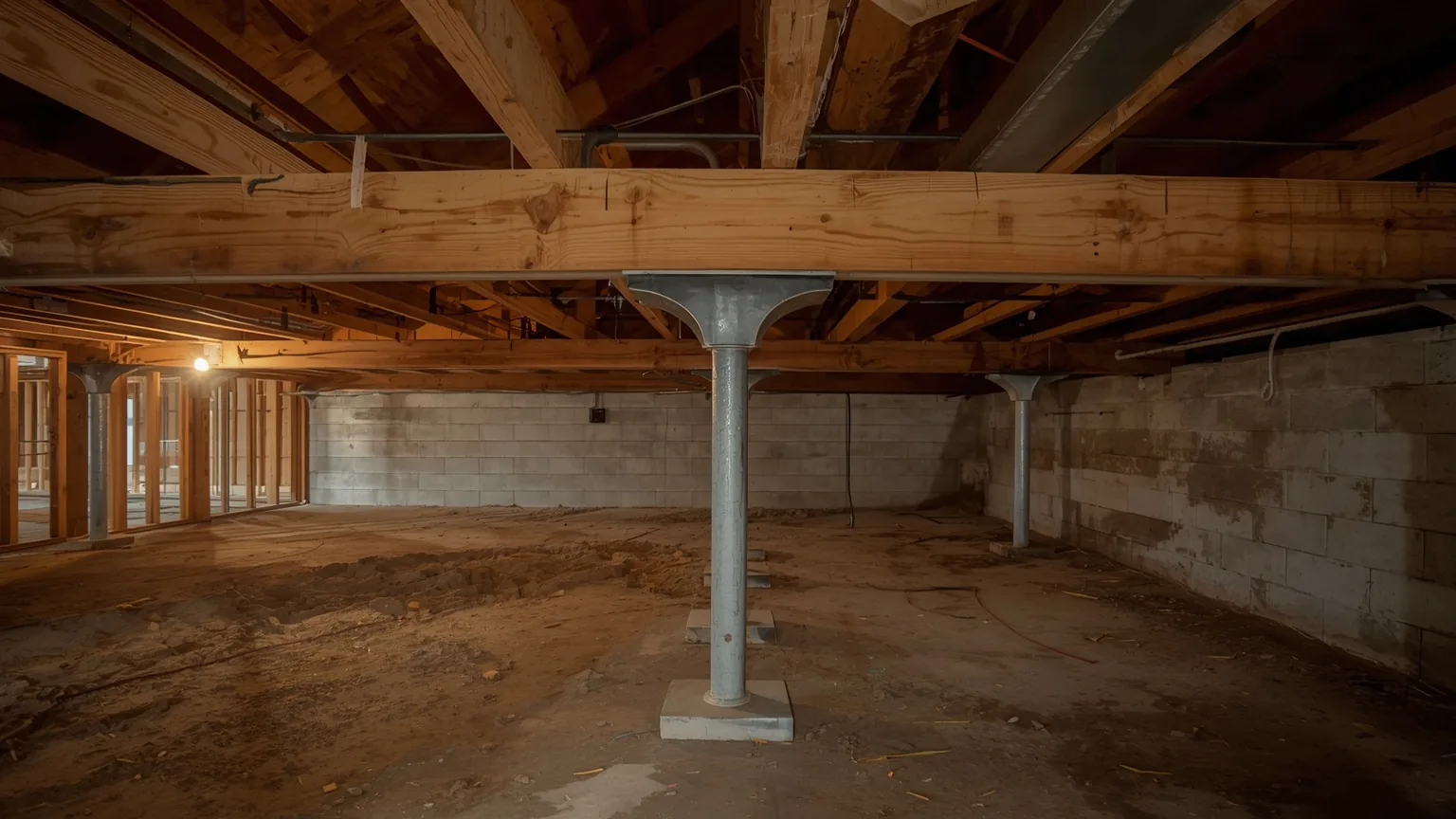
A floor that gives underfoot is reporting on the framing beneath it. In a house over a crawl space, that is usually a moisture story that has been running for years.
Find out what is actually causing it.
An on-site evaluation with moisture readings and a written scope — before any work is quoted.