
Crawl space mold removal in Nashville, TN
Growth on joists and subfloor is the visible result of a moisture condition that has been running for a while. Removing it without changing that condition reproduces it on the same timeline.
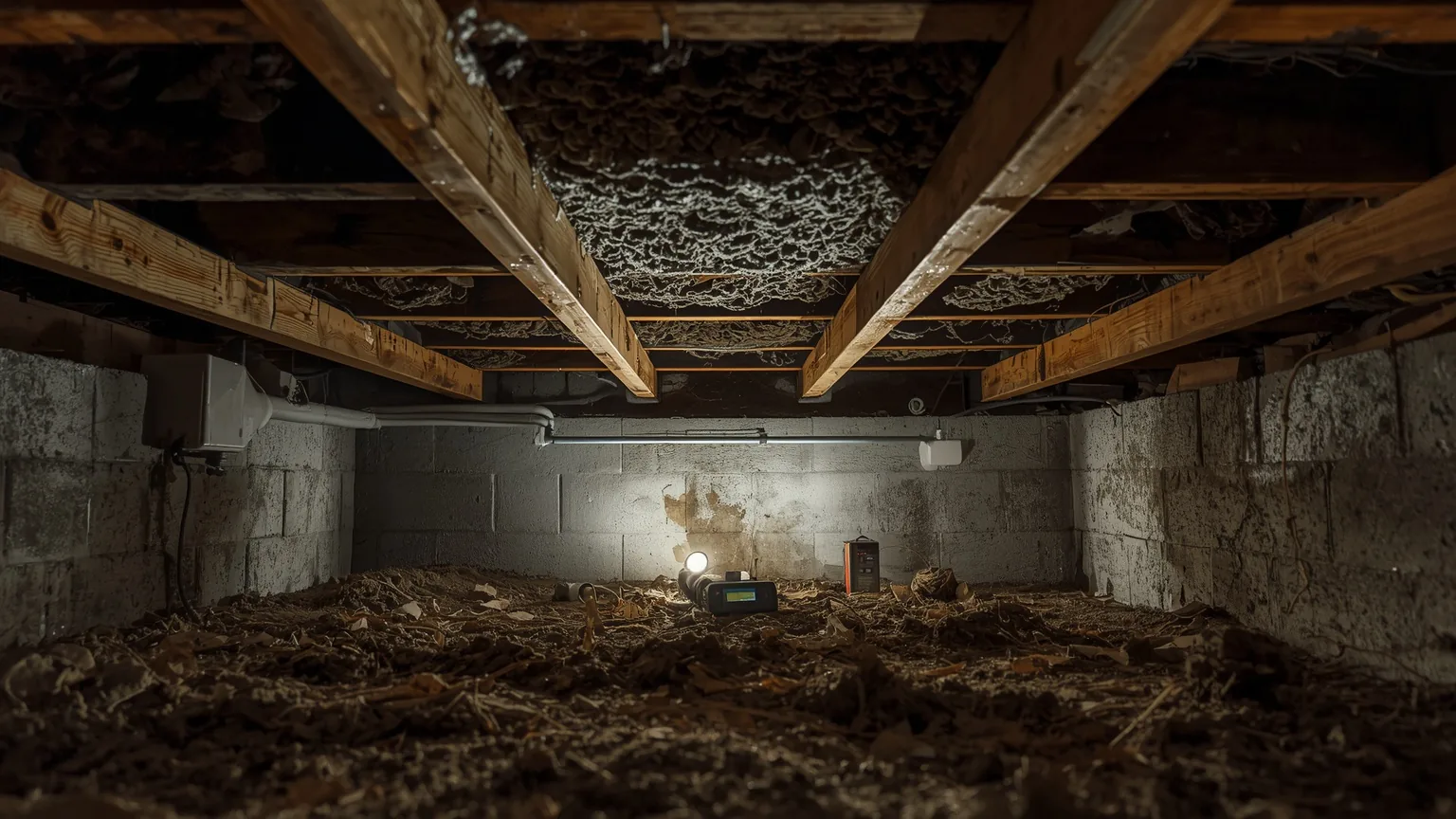
Who handles crawl space mold removal in Nashville, TN?
Nashville Crawl Space Solutions arranges crawl space mold remediation across Nashville and Middle Tennessee. The important thing to understand first: growth under a house is a symptom of sustained moisture, so removal that is not paired with moisture control returns. The diagnosis matters more than the cleaning. Call (615) 805-5343 to arrange an evaluation.
Why mold grows in a crawl space in the first place
Wood decay fungi need moisture in the wood to establish. Wood moisture content sustained around and above roughly 20% is the threshold generally used for fungal growth, and a vented crawl space in a humid subtropical climate reaches it easily in summer — not because water is pouring in, but because humid outside air contacts framing that is cooler than the outdoor dew point and condenses on it.
This is the mechanism most homeowners are never told. The vents were supposed to dry the space. In a Middle Tennessee summer they do the opposite: they admit air carrying far more moisture than the crawl space can hold at its own temperature, and that moisture leaves the air on the coolest surfaces available, which are the joists and the subfloor.
Why removal alone comes back
Cleaning removes the growth that exists. It does not change the humidity, the ventilation, the ground vapor or the water source that produced it. Where those conditions persist, growth re-establishes, and the second occurrence is often found later than the first because nobody is looking any more.
A remediation scope worth paying for therefore has two halves: removing and treating the affected material, and changing the conditions — sealing the space, controlling ground vapor, managing humidity, and dealing with any liquid water. A quote that covers only the first half is quoting half the job.
What it does to the house above
Air moves upward through a house. Warm air rising and escaping at the top draws replacement air in at the bottom, and in a house over a vented crawl space a meaningful share of that replacement air comes from the crawl space. That is why a musty smell in the living space so often originates below it, and why people notice the smell before they ever notice the cause.
The structural consequence runs in parallel. Sustained moisture in framing is what leads to soft joists, deteriorating girders and eventually movement in the floor above — which is why growth found early is a much smaller problem than growth found because the floors started to feel wrong.
What to ask before hiring anyone
Ask for moisture readings — in the wood, not just the air — and ask where they were taken. Ask what the scope does about the source, not only the growth. Ask whether the space will be sealed and how humidity will be managed afterwards.
Testing is worth understanding honestly: identifying a species rarely changes what has to be done, because the response to visible growth on framing is the same regardless. The readings that change the scope are moisture readings.
Why this keeps happening in Middle Tennessee
The physics that ruins vented crawl spaces is simple. Warm outdoor air holds far more moisture than cool air. When that air enters a crawl space and touches surfaces sitting below its dew point — ductwork, pipes, the underside of the subfloor — the moisture condenses out onto them. The vents that were supposed to dry the space are what deliver the water.
Nashville sits in a humid subtropical climate, which means long stretches of warm, moisture-heavy air from late spring through early fall, which is why crawl spaces here are often at their worst in midsummer rather than after heavy rain. Middle Tennessee sits on limestone. Limestone weathers into karst — fractures, seams and voids that move water underground in ways that are difficult to predict from the surface.
Wood begins supporting fungal growth at roughly 20 percent moisture content. Structural framing is not damaged by a single humid week; it is damaged by months of sitting above that threshold. Air moves upward through a house. A meaningful share of the air in your living space started in the crawl space, which is why crawl space humidity and odor show up upstairs.
Crawl Space Mold Removal questions
Is mold in a crawl space dangerous?
Health effects vary by person and exposure, and questions about symptoms belong with a physician. What is well established structurally is that the moisture conditions allowing growth also degrade framing over time, and that air moves from a crawl space into the living space above it, carrying what is down there with it.
Can I just clean it myself?
Surface growth can be cleaned, but that addresses the visible result rather than the cause. Without changing the humidity, ventilation and ground-vapor conditions that produced it, growth returns. The cleaning is the easy half; the moisture control is the half that determines whether it recurs.
Do I need mold testing before remediation?
Usually not to decide on action. Visible growth on framing calls for the same response regardless of species, so identification rarely changes the scope. Moisture readings are the measurements that do change it, because they establish how wet the wood is and where the water is coming from.
Will encapsulation stop mold from coming back?
Encapsulation addresses the conditions that cause it — ground vapor, humid air entering through vents, and unmanaged humidity — provided any liquid water source is dealt with first. Sealing a space that still takes on water does not solve the problem; it conceals it under the liner.
How do I know if the musty smell in my house is from the crawl space?
Air moves upward through a house, drawing replacement air in at the bottom, so crawl space air routinely reaches the living space. A musty smell that is stronger on the lowest floor, near floor registers, or after damp weather is consistent with a crawl space source, but an inspection is what confirms it.
Related moisture & encapsulation services
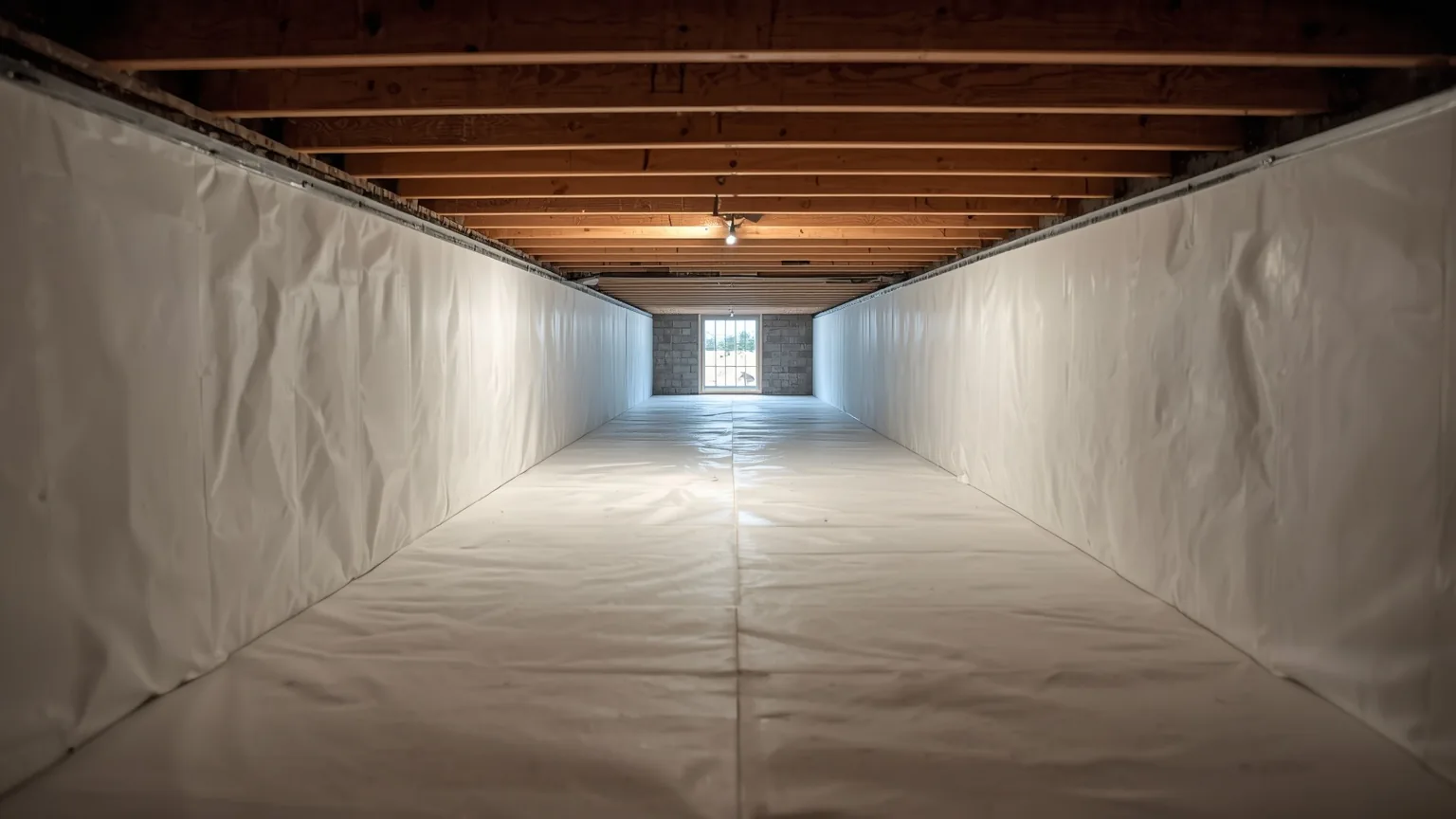
Crawl Space Encapsulation
Encapsulation seals the crawl space off from the ground and the outside air, then controls the humidity of what is left. Done properly it stops the moisture cycle that rots framing and pushes damp air upstairs. Done as a liner alone, it traps the problem instead of solving it.
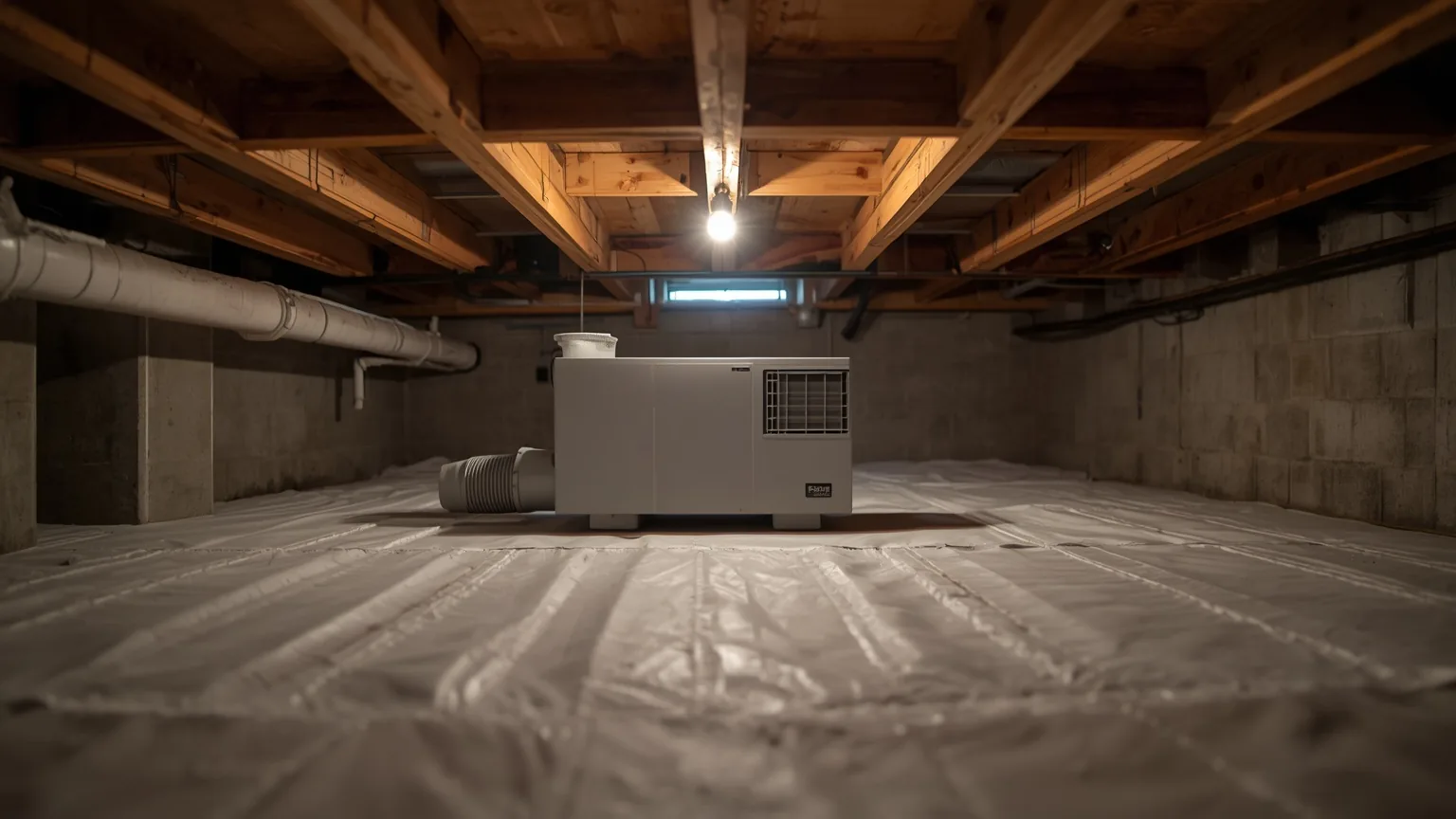
Crawl Space Dehumidifier Installation
A crawl space dehumidifier is not a portable unit set on the dirt with an extension cord. It is a permanently installed, drained appliance sized to the space, and it belongs at the end of a moisture plan rather than the start of one.
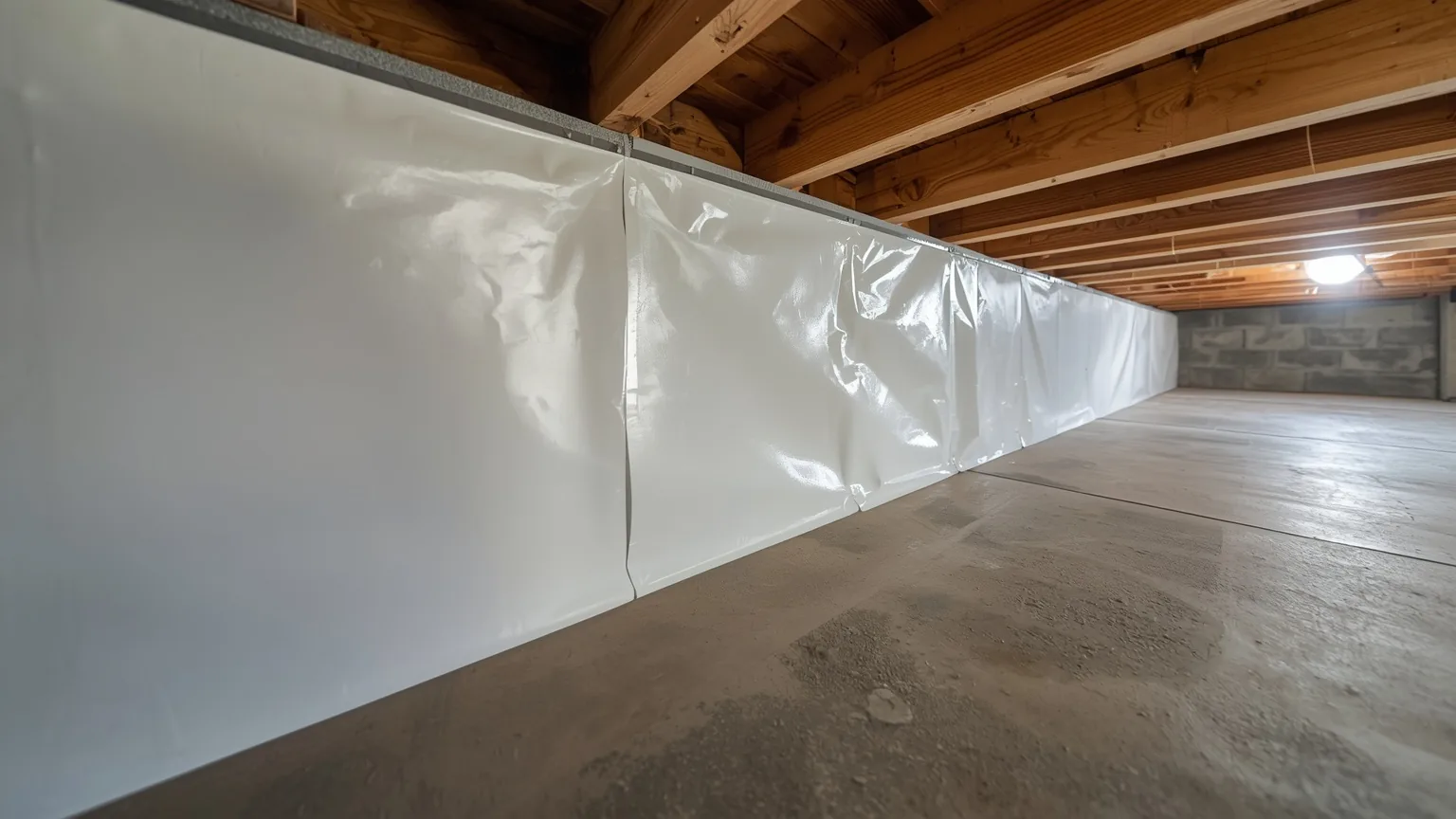
Crawl Space Encapsulation Cost
Encapsulation quotes for the same house can differ enormously and both be honest, because the word covers very different scopes of work. Here is what moves the number, so you can tell which one you are being quoted.
Find out what is actually causing it.
An on-site evaluation with moisture readings and a written scope — before any work is quoted.