
Crawl space vapor barrier installation in Nashville, TN
A vapor barrier stops moisture evaporating out of the soil into the crawl space. It is a real and useful part of moisture control — and it is also the step most often sold as a complete solution when it is not one.
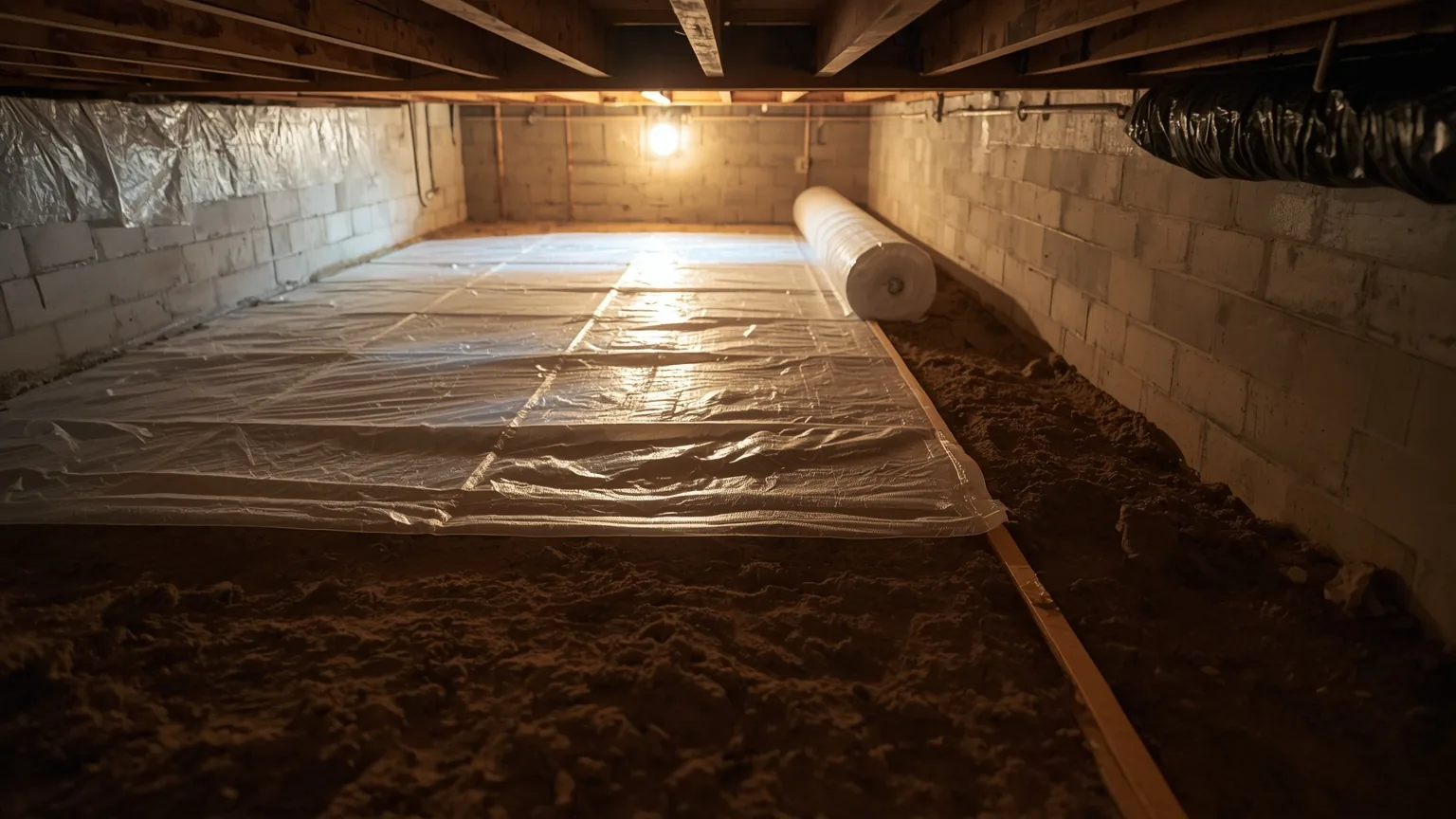
Who handles vapor barrier installation in Nashville, TN?
Nashville Crawl Space Solutions arranges professional crawl space vapor barrier installation across Nashville and Middle Tennessee, as a standalone measure where that is appropriate or as part of a full encapsulation. Call (615) 805-5343 to arrange an evaluation.
What a vapor barrier does
Bare soil in a crawl space is a continuous source of moisture. Even ground that looks dry gives off water vapor steadily as moisture moves upward through it and evaporates into the air. A vapor barrier is a sheet material laid over the ground to interrupt that.
Done properly, the material is sealed at the seams, run up the foundation walls and fastened, and fitted around piers and penetrations. Loose plastic thrown over the dirt — which is what many crawl spaces actually contain — leaves most of the ground exposed at the edges and seams and accomplishes comparatively little.
Where a barrier alone is enough, and where it is not
A vapor barrier can be a sensible standalone measure in a crawl space that is otherwise dry: no standing water, no active condensation, framing in a normal moisture range, and humidity that stays reasonable through the summer. In that situation it addresses the remaining moisture source at modest cost.
It is not sufficient when the crawl space takes on liquid water, because the barrier will simply cover it. It is also not sufficient when humid outside air is condensing on cool surfaces — that moisture is arriving through the vents, not from the ground, so covering the ground does not stop it.
This is the honest limit of the product, and it is worth knowing before you buy it as a fix.
Barrier versus full encapsulation
The practical difference is scope. A vapor barrier covers the ground. Encapsulation covers the ground, seals the vents and rim joists so outside air stops entering, and manages the humidity of the resulting sealed space.
Encapsulation costs more and does more. A vapor barrier is the right call in a dry crawl space with a soil moisture problem; encapsulation is the right call where humid air is the primary driver, which in this climate it frequently is.
A contractor should be able to tell you which situation you are in, and show you the readings that support it.
Why this keeps happening in Middle Tennessee
The physics that ruins vented crawl spaces is simple. Warm outdoor air holds far more moisture than cool air. When that air enters a crawl space and touches surfaces sitting below its dew point — ductwork, pipes, the underside of the subfloor — the moisture condenses out onto them. The vents that were supposed to dry the space are what deliver the water.
Nashville sits in a humid subtropical climate, which means long stretches of warm, moisture-heavy air from late spring through early fall, which is why crawl spaces here are often at their worst in midsummer rather than after heavy rain. Middle Tennessee sits on limestone. Limestone weathers into karst — fractures, seams and voids that move water underground in ways that are difficult to predict from the surface.
Wood begins supporting fungal growth at roughly 20 percent moisture content. Structural framing is not damaged by a single humid week; it is damaged by months of sitting above that threshold. Air moves upward through a house. A meaningful share of the air in your living space started in the crawl space, which is why crawl space humidity and odor show up upstairs.
Vapor Barrier Installation questions
Is a vapor barrier the same as encapsulation?
No. A vapor barrier covers the ground to stop soil moisture evaporating into the space. Encapsulation includes that plus sealing the vents and rim joists and controlling the humidity of the sealed space. Encapsulation is the larger system; a vapor barrier is one component of it.
How thick should a crawl space vapor barrier be?
Thickness is usually specified in mils, and heavier materials resist puncture better — which matters in a space anyone will crawl through for future service. More important than the number is whether seams are sealed, the material runs up the walls, and penetrations are properly fitted. A thick liner installed loosely underperforms a thinner one installed correctly.
Can I install a vapor barrier myself?
Homeowners do. The difficulty is less the material than the conditions — low clearance, obstructions, and the seam and edge detailing that determines whether it actually works. It is also worth having the space assessed first, because a barrier installed over an active water problem hides it rather than fixing it.
Will a vapor barrier fix my humidity problem?
It will if the ground was the main moisture source. It will not if humid outside air is entering through the vents and condensing on cool surfaces, since that water is not coming from the soil. Which one is happening should be established by measurement before the work is scoped.
Related moisture & encapsulation services

Crawl Space Encapsulation
Encapsulation seals the crawl space off from the ground and the outside air, then controls the humidity of what is left. Done properly it stops the moisture cycle that rots framing and pushes damp air upstairs. Done as a liner alone, it traps the problem instead of solving it.
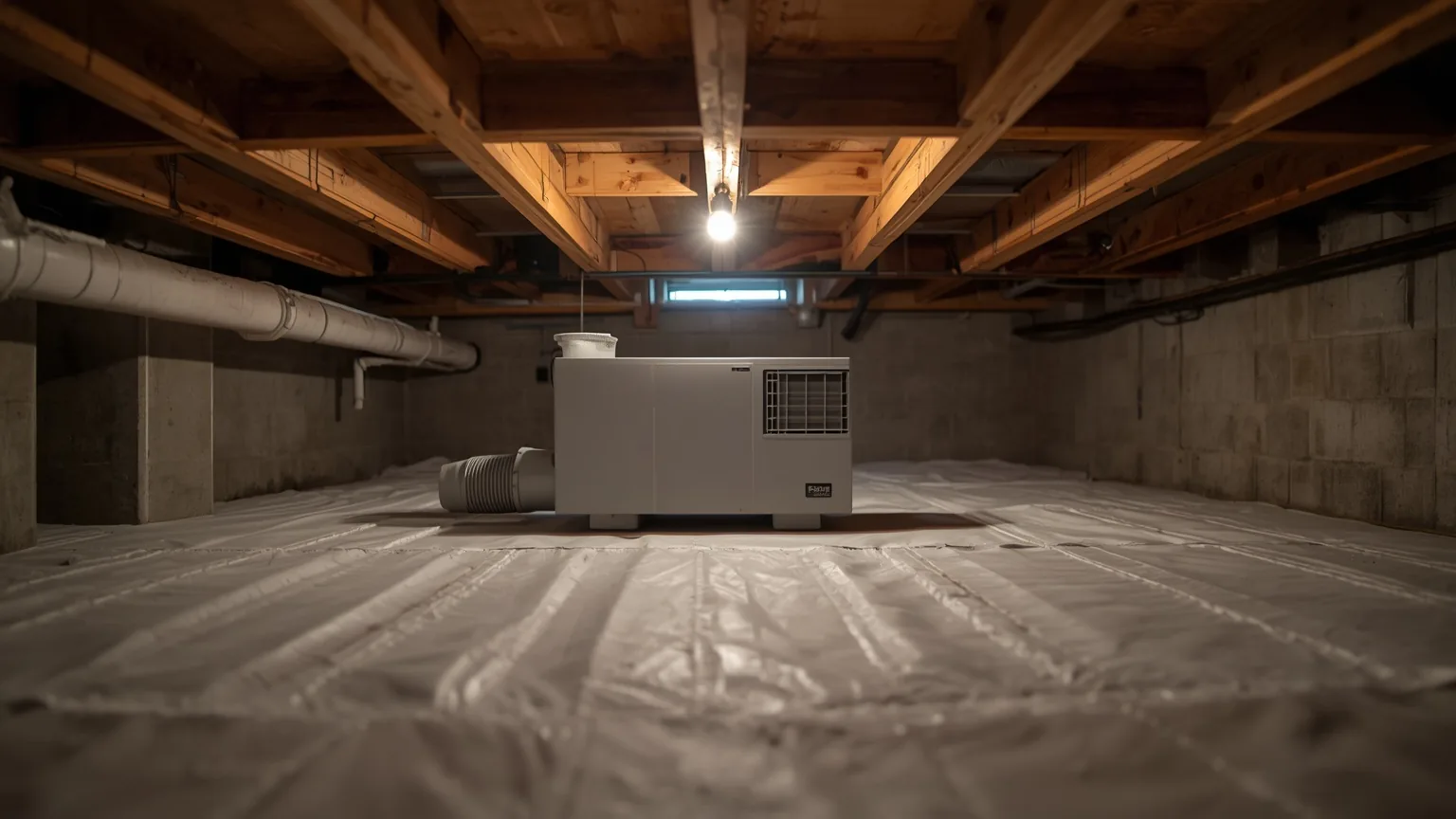
Crawl Space Dehumidifier Installation
A crawl space dehumidifier is not a portable unit set on the dirt with an extension cord. It is a permanently installed, drained appliance sized to the space, and it belongs at the end of a moisture plan rather than the start of one.
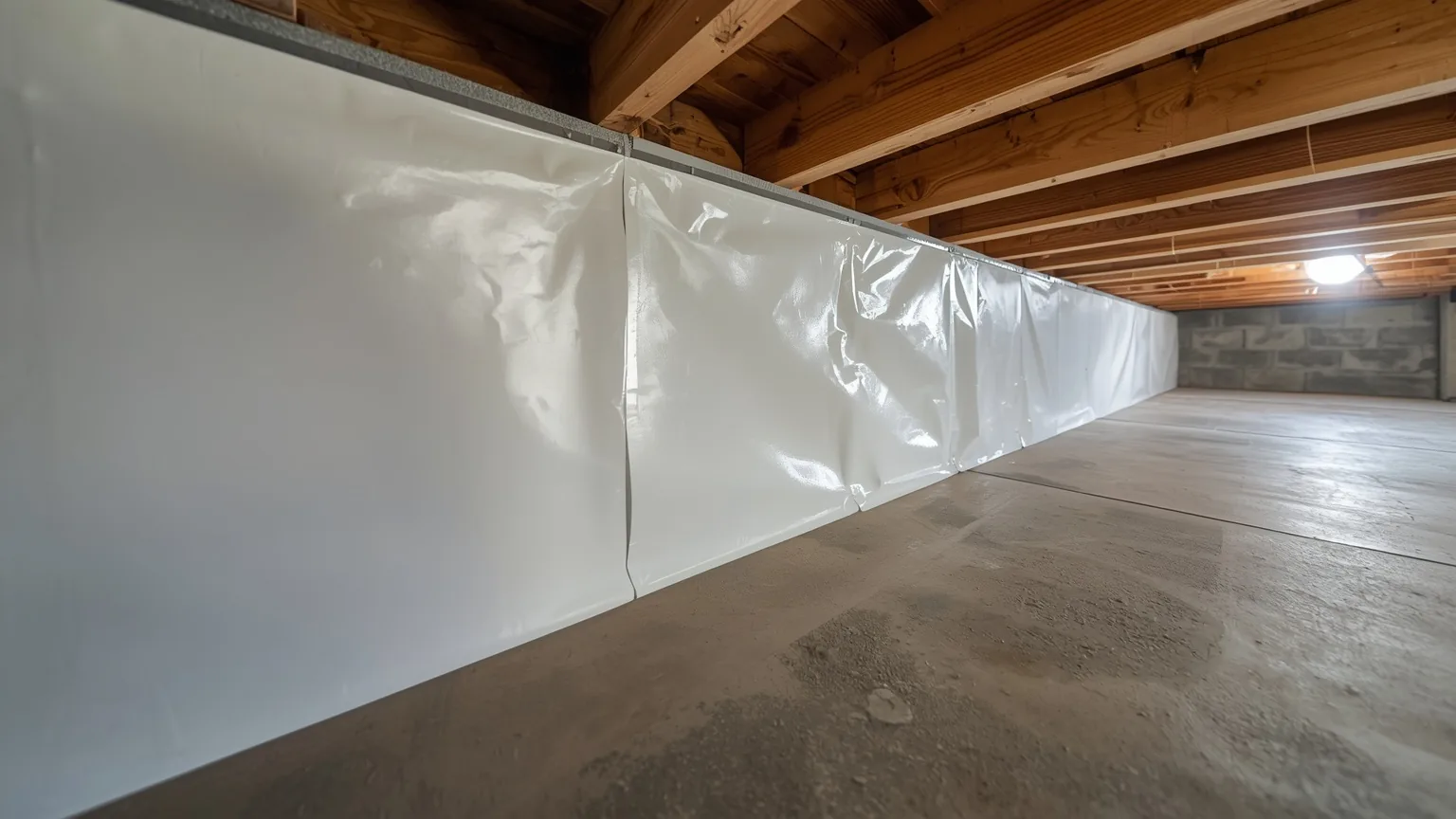
Crawl Space Encapsulation Cost
Encapsulation quotes for the same house can differ enormously and both be honest, because the word covers very different scopes of work. Here is what moves the number, so you can tell which one you are being quoted.
Find out what is actually causing it.
An on-site evaluation with moisture readings and a written scope — before any work is quoted.