
Crawl space sump pump installation in Nashville, TN
A sump pump is the exit route for water that drainage has already collected. On its own it is not a solution to a wet crawl space — it is the last step of one.
Who handles crawl space sump pump installation in Nashville, TN?
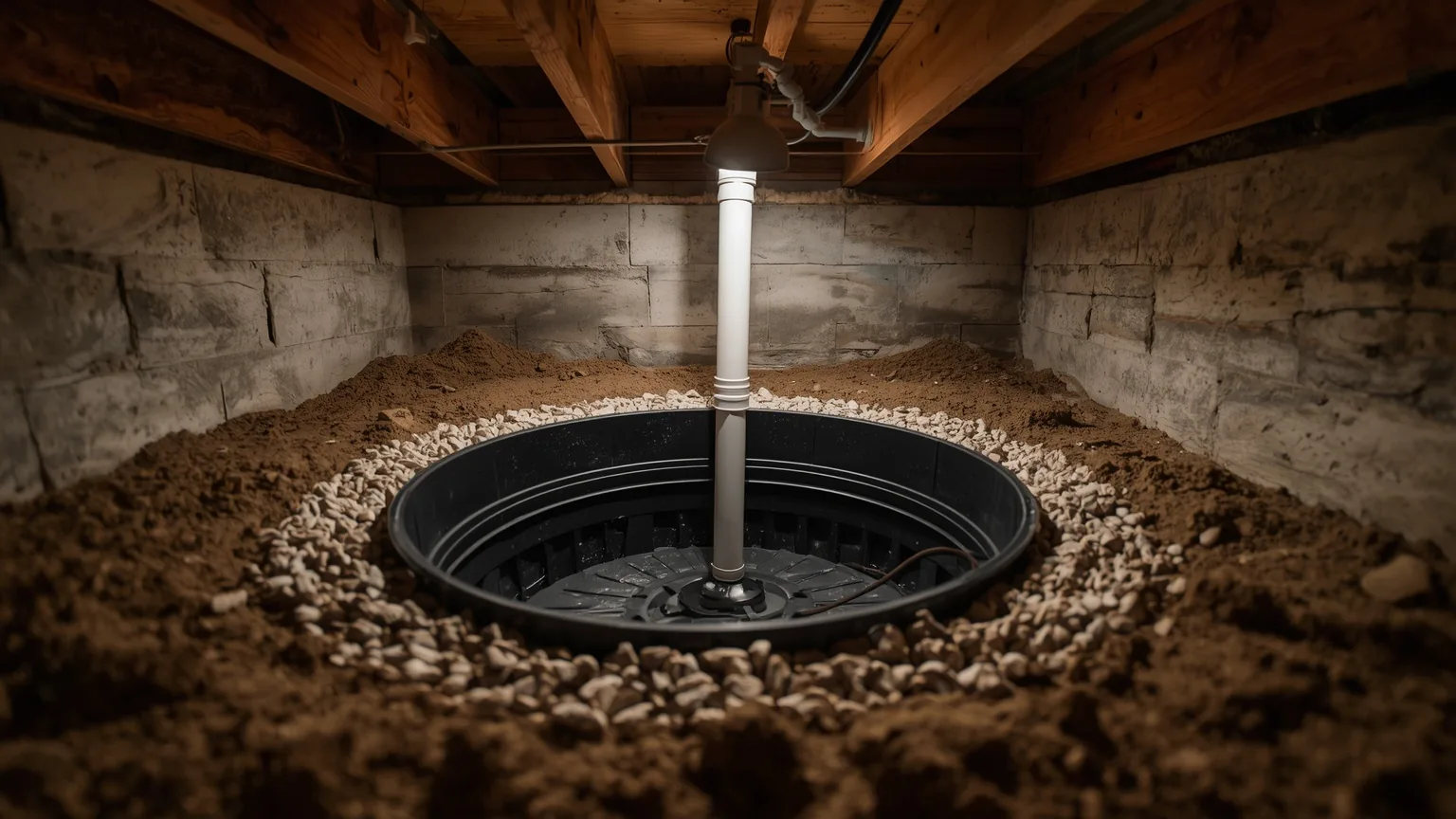
Nashville Crawl Space Solutions arranges crawl space sump pump installation across Nashville and Middle Tennessee. A sump pump is the discharge end of a drainage system: the basin collects what the drain lines carry to it, and the pump lifts it out and away from the foundation. Installing one without the drainage that feeds it rarely solves anything. Call (615) 805-5343 to arrange an evaluation.
When a sump pump is the right answer
A pump earns its place where water genuinely collects and gravity cannot take it anywhere. If the crawl space sits below the surrounding grade, or the ground falls toward the house, or there is no point lower than the crawl space floor to discharge to, a pump is how the water leaves.
It is the wrong answer where water is arriving off the roof and could be carried away at the surface for a fraction of the cost, and where a crawl space is damp rather than wet — humidity is not a pumping problem and a pump will run in a space that never had liquid water in it.
The basin
The collection basin is a lined pit set into the crawl space floor at the low point, deep enough that the pump cycles rather than running constantly and wide enough to hold a working volume between cycles. A basin that is too small produces short rapid cycling, which is what kills pumps early.
It should be covered. An open basin in a sealed crawl space is an evaporating surface inside the envelope you have just paid to seal, which works directly against the humidity control the rest of the system is doing.
The discharge is where installations fail
The pump lifts water to a discharge line, and where that line ends decides whether the system works. A line terminating near the foundation returns the same water to the soil beside the house, so the pump moves it in a circle and runs far more than it should.
The line should carry water clear of the foundation to somewhere it can drain away, and it should be arranged so a freeze cannot block it — in this climate hard freezes are short but real, and a blocked discharge during one is how a working system fails on the night it is needed.
Ask where the discharge terminates, how far from the house that is, and what happens to it in a freeze. A contractor who has not thought about the third question has not finished the design.
Backup, and what it actually protects against
A sump pump is an electrical appliance in the part of the house nobody visits. Two failure modes matter: the power goes out during the storm that produced the water, and the pump itself fails silently and is discovered weeks later.
A battery backup addresses the first. An alarm or a monitored switch addresses the second, and it is the cheaper of the two by a wide margin. Whether either is worth it depends on what is above the crawl space and how much water the space has taken historically — this is a judgment to make with the contractor rather than a default upgrade to accept.
How it fits with drainage, waterproofing and encapsulation
A pump is the endpoint of drainage: the drain lines collect water and route it to the basin, and the pump removes it. Installed without those lines, a pump only empties the small area immediately around itself.
It sits inside the wider waterproofing scope, and it precedes encapsulation wherever liquid water is present. Sealing first and pumping later is the sequence that leaves a liner over a wet floor.
Why discharge planning matters more here than the pump does
Middle Tennessee gets its rain in heavy bursts rather than steady drizzle, and the limestone underneath moves water in ways surface grading does not predict. That combination means the volume arriving at a crawl space can be large and can arrive quickly.
Under those conditions the pump is rarely the limiting factor — the discharge is. A line that is too short, ends too close to the foundation, or can freeze will fail during exactly the storm that mattered, regardless of how good the pump is. When comparing quotes, the discharge detail tells you more about the installer than the pump model does.
Crawl Space Sump Pump Installation questions
Do I need a sump pump in a crawl space?
Only where water collects and cannot leave by gravity. If the crawl space sits below the surrounding grade or has no lower point to discharge to, a pump is how water gets out. A damp but not wet crawl space is a humidity problem, and a pump does nothing for it.
Where should the discharge line end?
Far enough from the foundation that the water is not simply returned to the soil beside the house, and arranged so a freeze cannot block it. A discharge terminating at the foundation wall recirculates the same water and makes the pump run far more than it needs to.
Should the sump basin be covered?
Yes, particularly in a sealed crawl space. An open basin is an evaporating surface inside the envelope, which adds humidity to the space that the dehumidifier then has to remove — working directly against the encapsulation.
Is a battery backup worth it?
It depends on what the crawl space protects and how often it has taken water. A backup covers the case where power fails during the storm producing the water. An alarm covers silent pump failure and costs far less, so it is often the higher-value addition of the two.
Can a sump pump alone fix a wet crawl space?
Rarely. Without drain lines feeding it, a pump only clears the area immediately around the basin. It is the exit point of a drainage system rather than a standalone solution, and installing one on its own is a common reason a wet crawl space stays wet.
Related crawl space services
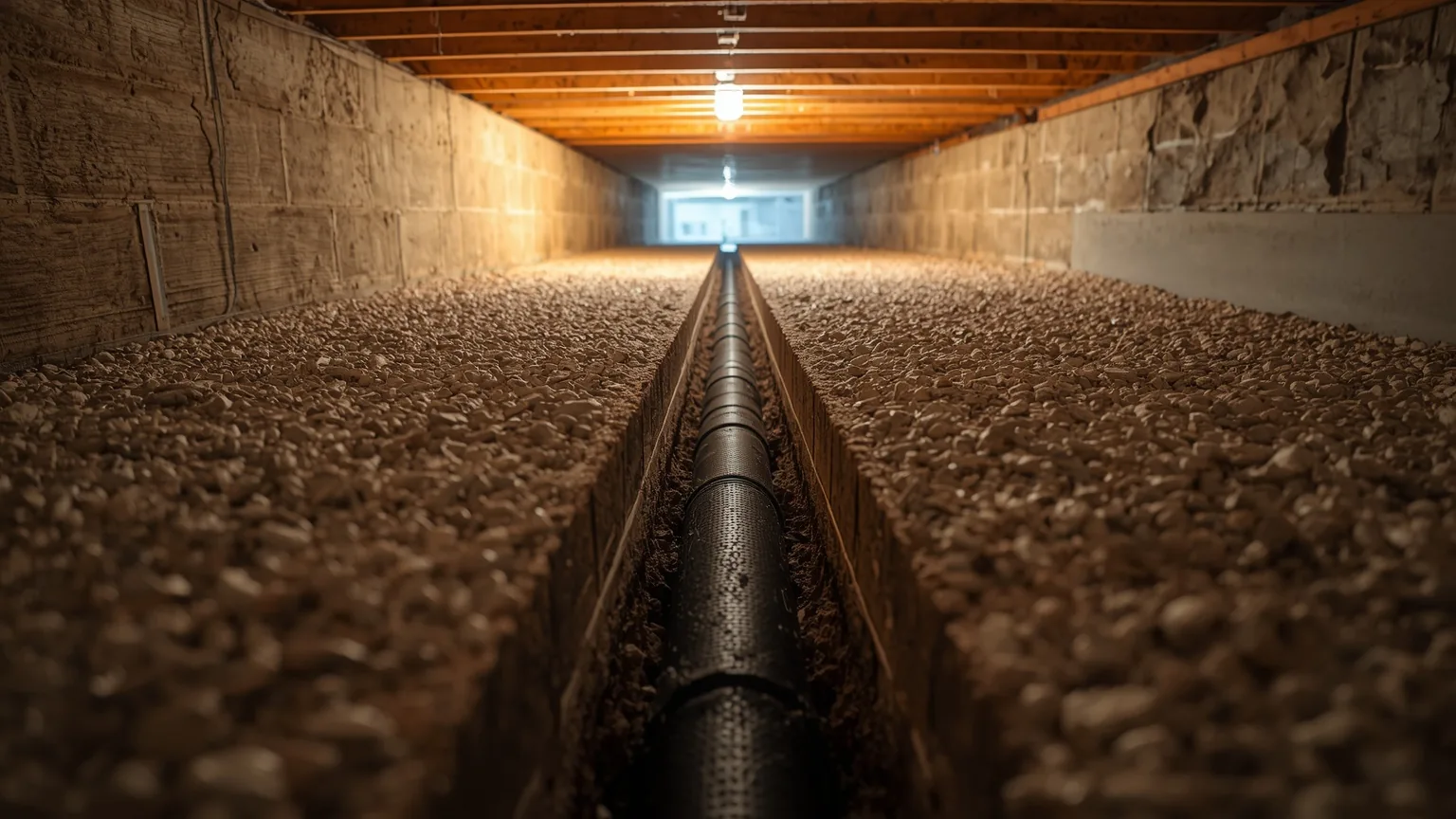
Crawl Space Drainage
Where the water comes from, and why it is dealt with before anything is sealed.
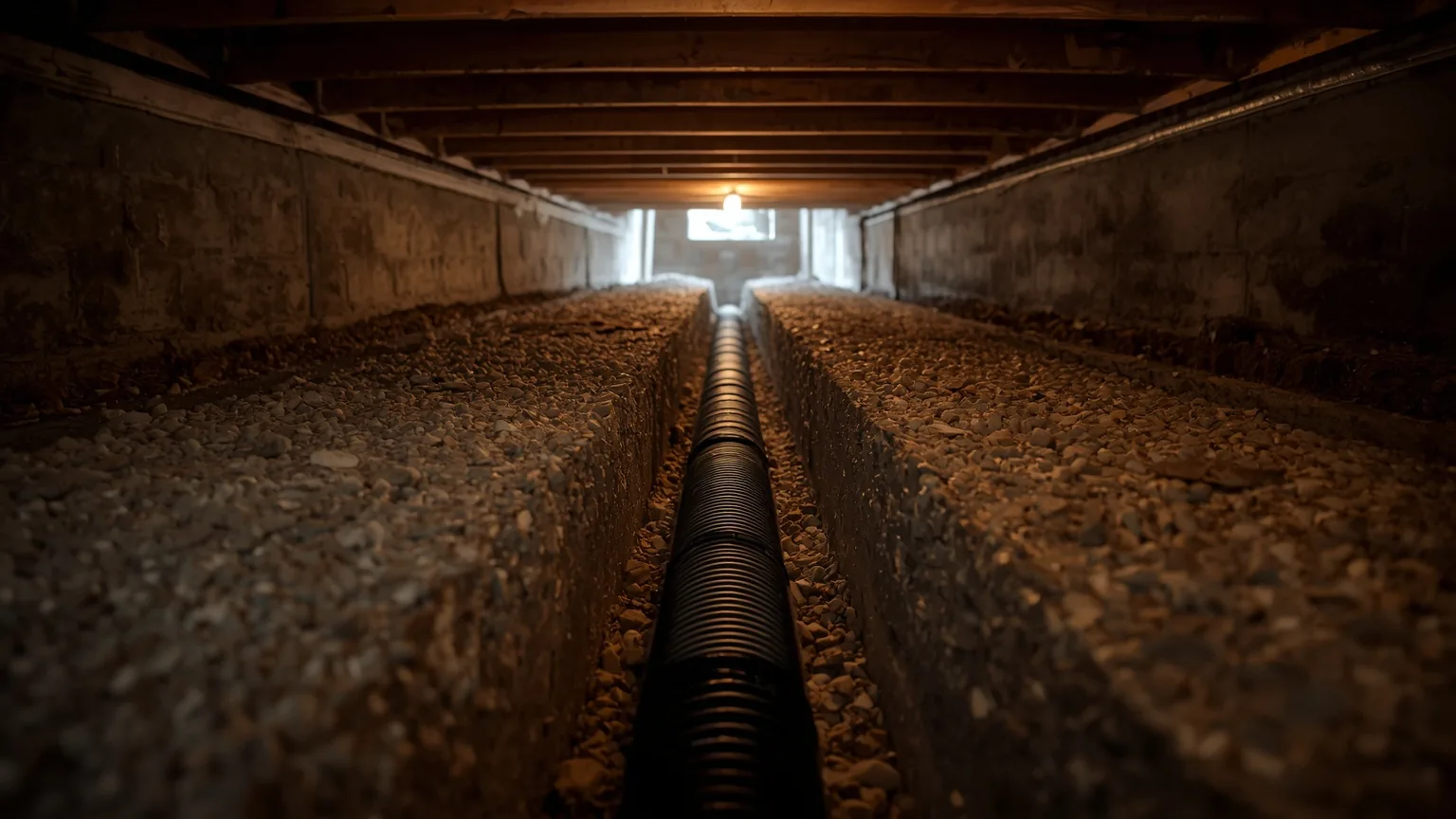
Crawl Space Waterproofing
Stopping water at the perimeter and giving what gets in a route out.
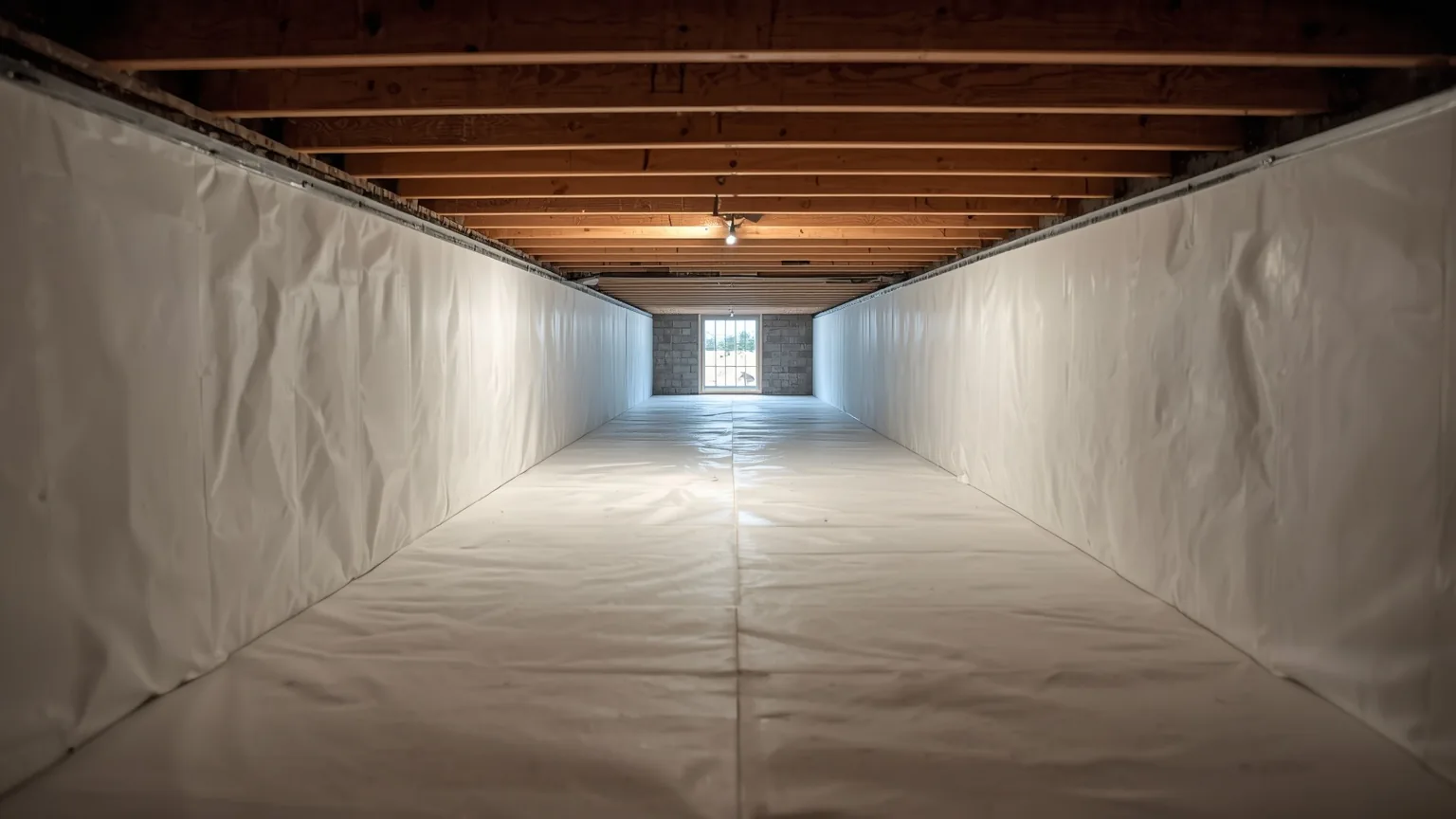
Crawl Space Encapsulation
Sealing the space off from the ground and the outside air — then managing what is left.
Crawl Space Repair
Joists, girders and supports that have lost capacity to long-term moisture.
Find out what is actually causing it.
An on-site evaluation with moisture readings and a written scope — before any work is quoted.