
Crawl space drainage in Nashville, TN
Drainage is the work that decides whether everything after it holds. Sealing a crawl space that still takes on liquid water traps the problem underneath the liner rather than solving it.
Who handles crawl space drainage in Nashville, TN?
Nashville Crawl Space Solutions arranges crawl space drainage across Nashville and Middle Tennessee. Drainage handles liquid water — standing water, surface runoff and groundwater entering the space. It is not the same as encapsulation, and where water is present it has to come first, because a liner laid over an active water source seals the water in. Call (615) 805-5343 to arrange an evaluation.
Where the water is actually coming from
Water reaches a crawl space by three routes, and they call for different work. Establishing which one you have is the whole point of the evaluation — the wrong diagnosis produces expensive work that does not fix anything.
- Surface runoff. Rain that lands on the roof and the ground next to the house and is not carried away. This shows up within an hour or two of a storm and stops soon after. It is the cheapest cause to fix and the most commonly missed.
- Groundwater. Water moving through the soil under pressure, arriving at the footing and entering at the wall or up through the ground. It shows up a day or more after rain, or during a wet spell with no storm at all, and it is what interior drainage is for.
- Plumbing. A supply leak, a failed drain line or a condensate line discharging under the house. It is independent of weather, which is the tell — a crawl space that is wet in a dry August is not being wet by rain.
The cheap causes get checked first
A competent evaluation looks at the outside of the house before proposing anything under it. Gutters discharging at the foundation, downspouts ending at the wall, and grading that has settled back toward the house account for a large share of wet crawl spaces, and all three are inexpensive to correct relative to interior work.
This matters because the sequence is often reversed. A contractor who proposes a full interior drainage system without having looked at where the downspouts end has skipped the step that might have solved the problem for a fraction of the cost. Ask what was found outside before you accept a scope for inside.
What interior drainage actually is
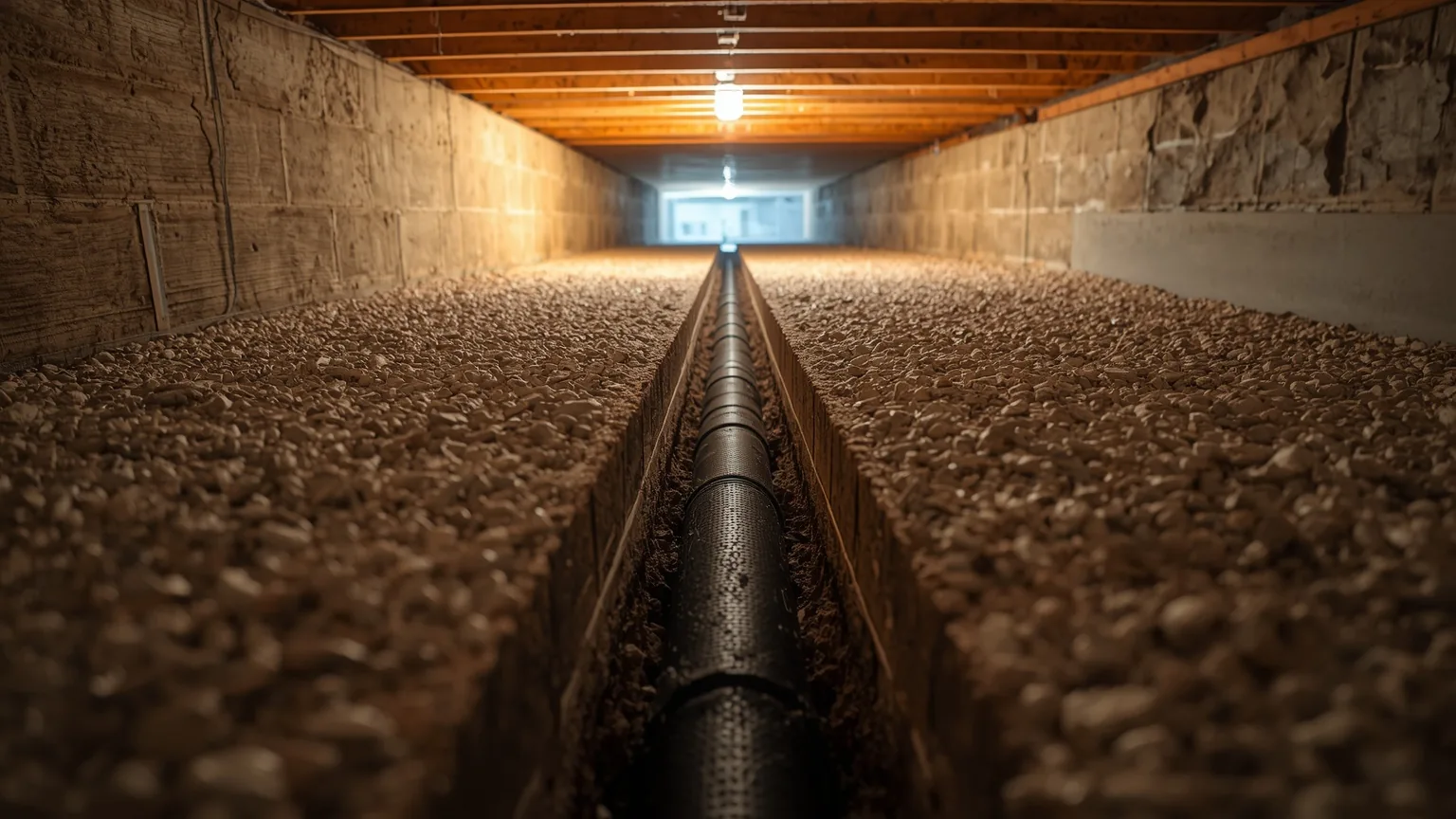
Where water is genuinely arriving through the ground rather than off the roof, the work is a drainage channel cut into the crawl space floor at the perimeter, bedded in washed gravel, carrying a perforated pipe that runs to a collection point. From there a pump lifts the water out and discharges it far enough from the foundation that it is not immediately drawn back.
The discharge is the part most often done badly. A line that ends against the foundation wall recirculates the same water, and one that ends where it can freeze creates a blockage in the weeks it is most needed. Ask where the discharge terminates and how far from the house it is.
This is excavation under an occupied structure, near footings and often near services. It is not homeowner work, and this page deliberately does not describe how to do it.
How drainage relates to waterproofing and encapsulation
These three words get used interchangeably in sales copy and they describe different work. Drainage moves liquid water that is already inside to somewhere it can leave. Waterproofing is the broader effort to stop water reaching the space in the first place, of which drainage is one component. Encapsulation addresses vapor and humidity, and does nothing about liquid water at all.
The order is what protects your money. Water first, then any framing the water damaged, then sealing and humidity control. Sealing a space that still takes on water puts a liner over the problem — the water continues doing what it was doing, now where nobody can see it, and the encapsulation you paid for is what hides it.
When drainage should come before encapsulation
Any time liquid water is present. Not damp soil, not high humidity — actual water, standing on the ground, running along a footing, or leaving a visible line on the block after a storm.
If a contractor has seen standing water in your crawl space and quoted encapsulation without drainage, that quote is describing a different job from the one your house needs. It is the single most common way homeowners in this region end up paying twice.
Why drainage is unpredictable on Middle Tennessee limestone
Most of the country sits on soil that moves water in ways you can reason about from the surface. Middle Tennessee sits on limestone, and limestone weathers into karst — fractures, seams and solution voids that carry water underground along paths that have little to do with the slope of your yard.
The practical consequence is that a crawl space here can stay dry for years and then take water after a single storm, with nothing visible having changed outside. It also means water can arrive from the uphill side of a house, or from a direction the grading appears to rule out. That is why drainage design here starts with finding the actual entry point rather than assuming the low corner of the lot is the answer.
Crawl Space Drainage questions
Do I need drainage if I am encapsulating?
Only if liquid water enters the space. Encapsulation manages ground vapor and humidity; it does not remove standing water. Where water arrives through the walls or the floor, drainage is installed first, because a liner over an active water source seals the water underneath it.
Why is my crawl space wet when it has not rained?
Two common explanations. Groundwater moving through the soil arrives on its own schedule rather than the weather's, often a day or more after rain. Alternatively the source is plumbing — a supply leak or a condensate line discharging under the house — which is independent of rain entirely.
Can I fix crawl space drainage myself?
Surface work is often within reach: extending downspouts away from the house and correcting grading that has settled toward the foundation are genuinely useful and low risk. Interior drainage is excavation under an occupied structure near footings and services, and is not homeowner work.
Is drainage the same as waterproofing?
Drainage is one part of waterproofing. Waterproofing is the whole effort to keep water out of the space; drainage is specifically about collecting the water that gets in and giving it a route out. A quote using the two words interchangeably is worth questioning.
How do I know whether the water is runoff or groundwater?
Timing is the clearest signal. Water appearing within an hour or two of rain and receding soon after points to surface runoff — gutters, downspouts and grading. Water appearing a day or more later, or in a wet spell with no storm, points to a risen water table and calls for drainage rather than surface fixes.
Related crawl space services
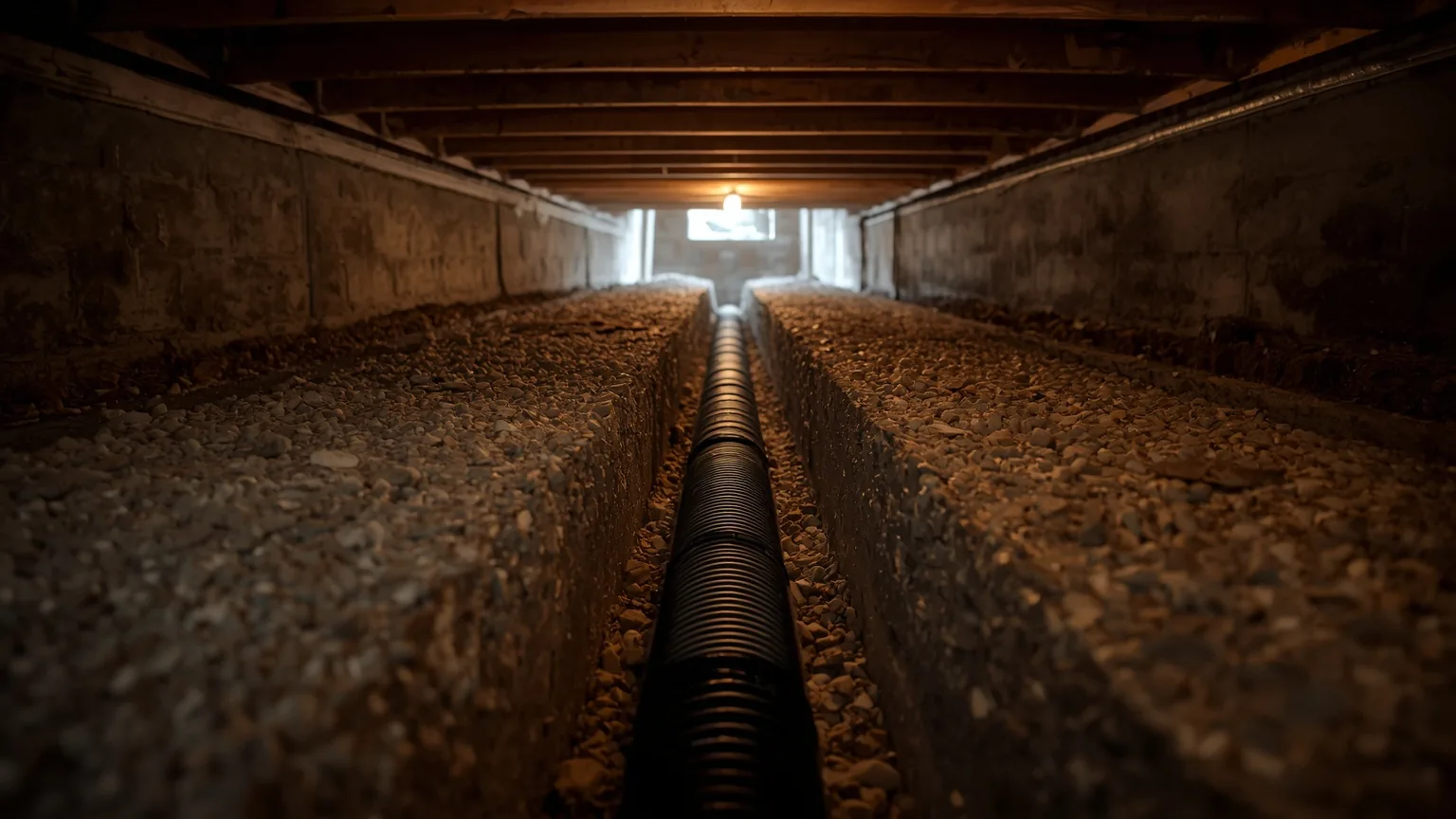
Crawl Space Waterproofing
Stopping water at the perimeter and giving what gets in a route out.
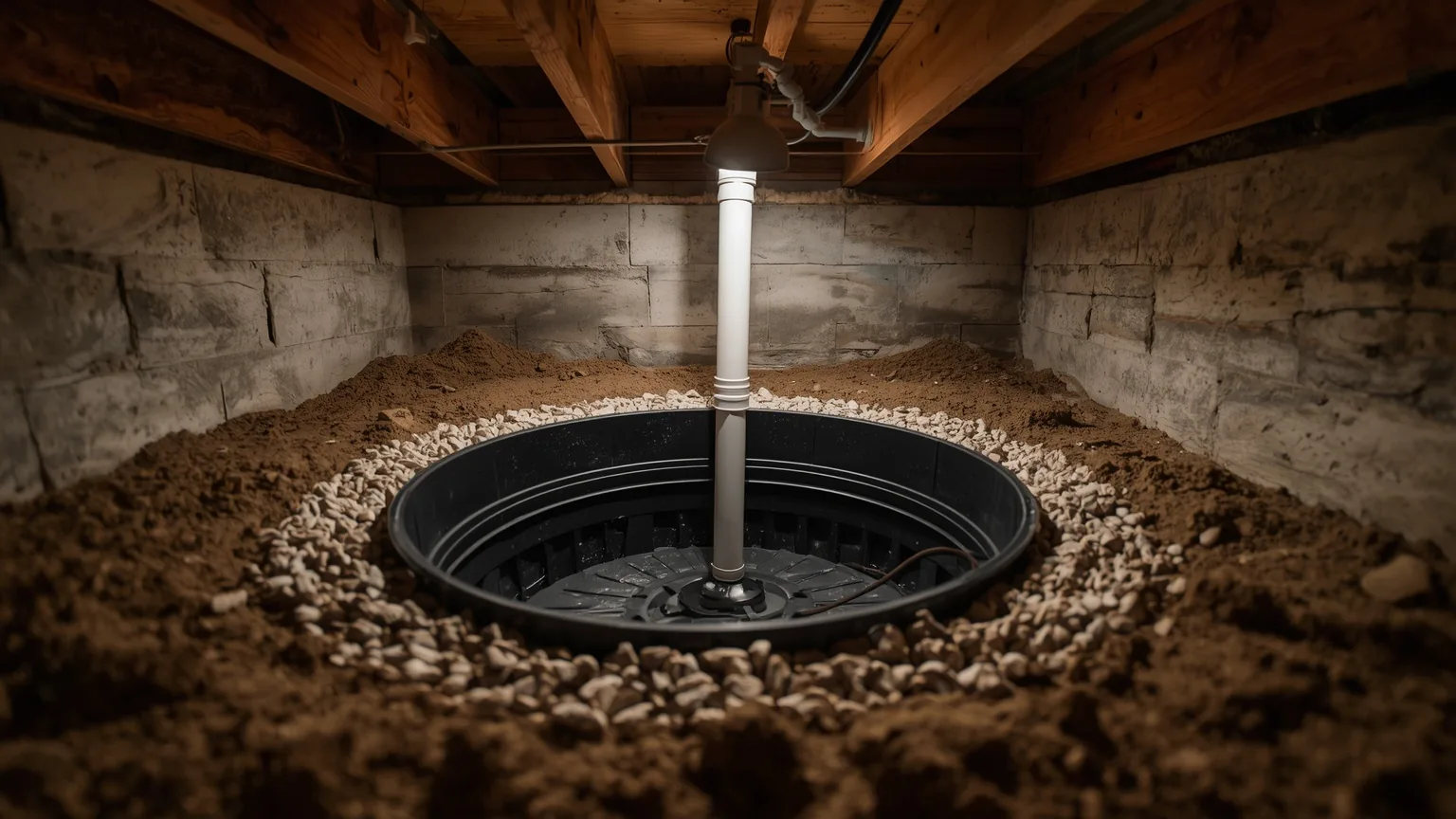
Crawl Space Sump Pump Installation
The exit route for collected water — basin, discharge and what backup really buys.
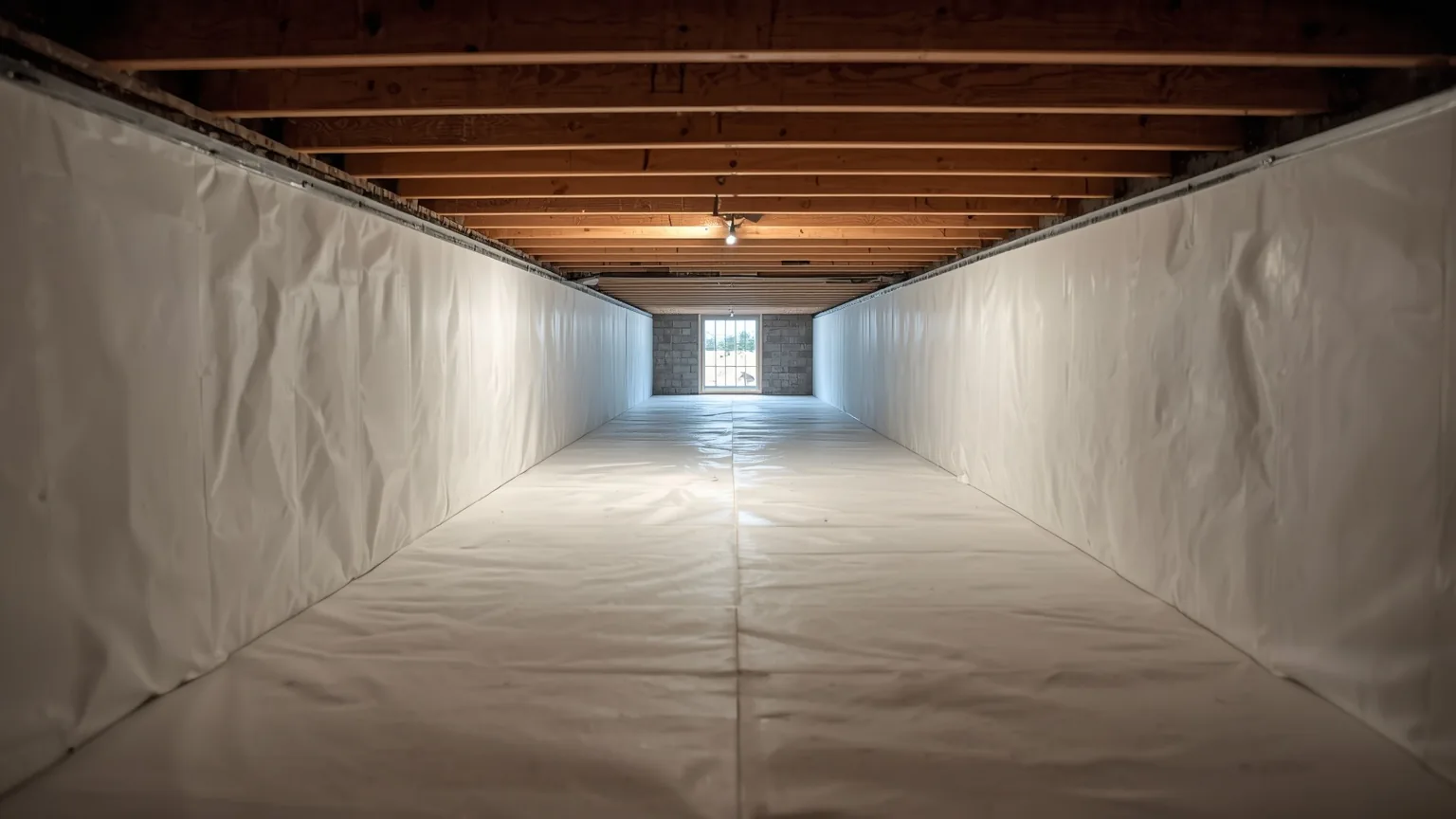
Crawl Space Encapsulation
Sealing the space off from the ground and the outside air — then managing what is left.
Crawl Space Repair
Joists, girders and supports that have lost capacity to long-term moisture.
Find out what is actually causing it.
An on-site evaluation with moisture readings and a written scope — before any work is quoted.